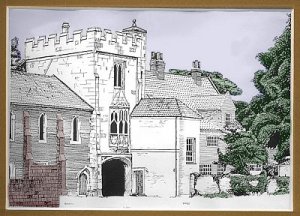

A Murder and a Ghost at Cawood Castle

Cawood Castle, Cawood, England
Easter Tuesday 1690
William Barwick murdered his pregnant wife and hid her body in a nearby pond. The following day Easter Tuesday, 1690 a witness saw the ghost of Mrs Barwick pointing to the pond that concealed her corpse. He reported what he had seen to the authorities, and William was arrested soon afterwards. The ghost of his wife still haunts the castle

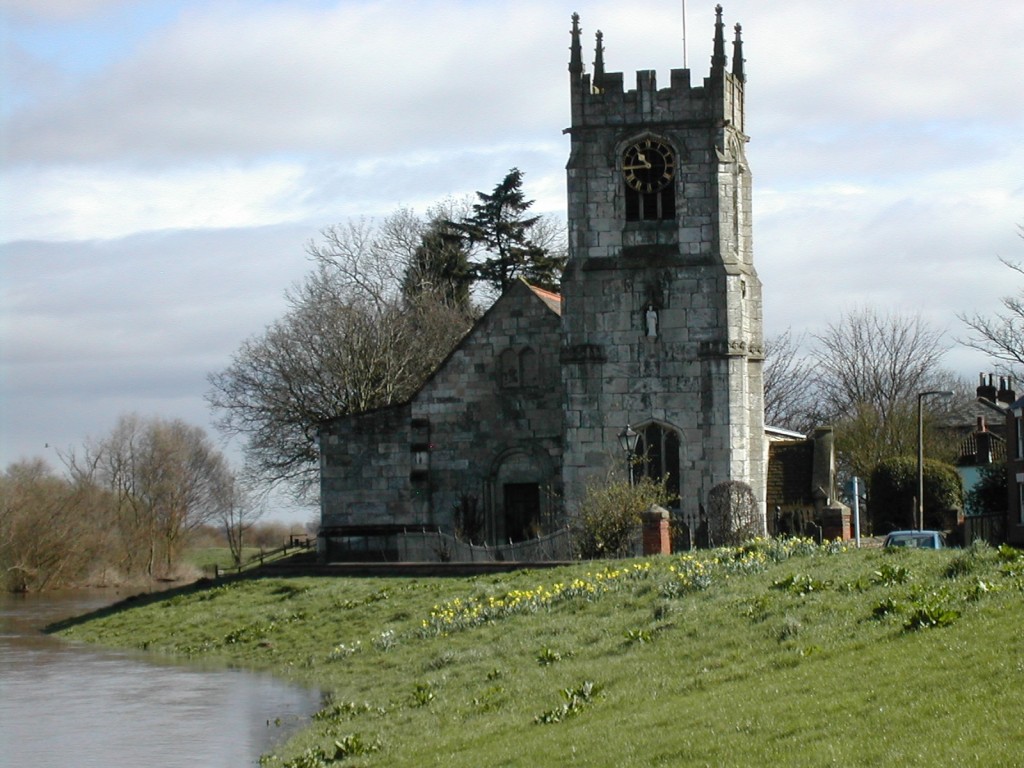
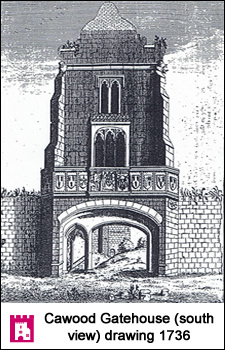
Cawood Castle was a palace of the Archbishop of York probably built upon an early Saxon fortification dating from the reign of King Athelstan (Æthelstan) 925AD – 939AD. During the English Civil War (1642–1651) Cawood was fought over several times and served as a prisoner of war camp. Following the war it was all but destroyed and all that remains now is the gatehouse and banqueting hall. Four decades after the castles abandonment, a murder took place within its grounds and the killer was apparently caught with the aid of his victims ghost.

The story of this murder has appeared in several publications, but the following account comes from one of the earliest, Arthur L Hayward’s ‘Lives of

the most remarkable criminals: Who have been Condemned and Executed for Murder, the Highway, Housebreaking, Street Robberies, Coining or

other offences’ (1735).

‘Murder was committed by William Barwick, upon the body of Mary Barwick his wife, at the same time big with child. What were the motives that

induced the man to do this horrid fact does not appear by the examination of the evidence, or the confession of the party; only it appeared upon his

trial that he had got her with child before he married her, that being then constrained to marry her, he grew weary of her, which was the reason he was

so willing to be rid of her, though he ventured body and soul to accomplish his design.

The murder was committed on Palm Monday, being then the fourteenth of April, about two o’clock in the afternoon, at which time the said Barwick

drilled his wife along until he came to a certain close, within sight of Cawood Castle, where he found the conveniency of a pond. He threw her by

force into the water, and when she was drowned and drawn forth again by himself upon the bank of the pond, he had the cruelty to behold the motion

of the infant, yet warm in her womb. This done, he concealed the body, as it may readily be supposed, among the bushes that usually encompass a

pond, and the next night when it grew dusk, fetching a hay spade from a rick that stood in the close, he made a hole by the side of the pond, and

there slightly buried the woman in her clothes.

Having thus despatched two at once, and thinking himself secure, because unseen, he went the same day to his brother-in-law, one Thomas Lofthouse

of Rusforth, within three miles of York, who had married his drowned wife’s sister, and told him he had carried his wife to one Richard Harrison’s

house in Selby, who was his uncle, and would take care of her.

But Heaven would not be so deluded, but raised up the ghost of the murdered woman to make the discovery. It was Easter Tuesday following, about

two-o’clock in the afternoon, that the afore-mentioned Lofthouse, having occasion to water a quickset hedge not far from his house, as he was going

for the second pailful, an apparition went before him in the shape of a woman, and soon after set down against a rising green grass plot, right over

against the pond. He walked by her as he went to the pond, and as he returned with the pail from the pond, looking sideways to see whether she

continued in the same place, he found she did, and that she seemed to dandle something in her lap that looked like a white bag, as he thought, which

he did not observe before. So soon as he had emptied his pail, he went into his yard and stood still to turn whether he could see her again, but she

was vanished. In this information he says that the woman seemed to be habited in a brown-coloured petticoat, waistcoat and a white hood, such a one

as his wife’s sister usually wore, and that her countenance looked extremely pale and wan, with her teeth in sight, but no gums appearing, and that her

physiognomy was like that of his wife’s sister, who was wife to William Barwick.

But notwithstanding the ghastliness of the apparition, it seems it made so little impression on Lofthouse’s mind that he thought no more of it, neither

did he speak to anybody concerning it until the same night, as he was at family duty of prayers, when that apparition returned again to his thoughts,

and discomposed his devotion; so that after he had made an end of his prayers, he told the whole story of what he had seen to his wife, who laying

circumstances together, immediately inferred that her sister was either drowned or otherwise murdered, and desired her husband to look after her the

next day, which was the Wednesday in Easter week.

Upon this, Lofthouse, recollecting what Barwick had told him of his carrying his wife to his uncle at Selby, repaired to Harrison before-mentioned,

but found all that Barwick had said to be false, for Harrison had neither heard of Barwick nor his wife, neither did he know anything of them. Which

notable circumstance, together with that other of the apparition, increased his suspicion to that degree that now concluding his wife’s sister was

murdered, he went to the Lord Mayor of York. And having obtained his warrant, he got Barwick apprehended; who was no sooner brought before the

Lord Mayor, but his own conscience then accusing him, he acknowledged the whole matter, as it has been already related, and as it appears by the

examination and confession herewith printed.

On Wednesday, the 16th of September, 1690, the criminal, William Barwick, was brought to his trial before the Honourable Sir John Powel, Knight,

one of the judges of the Northern Circuit, at the assizes held at York, where the prisoner pleaded not guilty to his indictment. But upon the evidence of

Thomas Lofthouse and his wife, and a third person, that the woman was found buried in her clothes, close by the pond side, agreeable to the

prisoner’s confession, and that she had several bruises on her head, occasioned by the blows the murderer had given her to keep her under water, and

upon reading the prisoner’s confession before the Lord Mayor of York, attested by the clerk who wrote the confession, and who swore the prisoner’s

owning and signing it for truth, he was found guilty and sentenced to death, and afterwards ordered to be hanged in chains.

All the defence that the prisoner made was only this, that he was threatened into the confession that he had made, and was in such a consternation that

he did not know what he said or did; but then it was sworn to by two witnesses that there was no such thing as any threatening made use of, but that

he made a free and voluntary confession, only with this addition at first, that he told the Lord Mayor he had sold his wife for five shillings, but not

being able to name either the person or the place, where she might be produced, that was looked upon as too frivolous to outweigh circumstances

that were too apparent.

The Examination of William Barwick, taken the 25th of April, 1690

Who sayeth and confesseth that he carried his wife over a certain wainbridge, called Bishop Dyke Bridge, between Cawood and Sherburn; and within

a lane about one hundred yards from the said bridge, and on the left hand of the said bridge, he and his wife went over a stile, on the left hand of a

certain gate, entering into a certain close, on the left hand of the said lane; and in a pond in the said close, adjoining to a quick-wood hedge, he did

drown his wife and upon a bank of the said pond did bury her, and further, that he was within sight of Cawood Castle, on the left hand, and there was

but one hedge betwixt the said close where he drowned his wife, and the Bishops Slates, belonging to the said castle.

William Barwick
Exam, capt. did etc.
anno super dict.
coram me.

S. Dawson, Mayor

England North Yorkshire Yorkshire Apparitions Cawood Hauntings
Re: Cawood Castle

According to ‘The Haunted Homes and Family Traditions of Great Britain’ by John Ingram (1897)

Anyone conversant with the less-known judicial records of the past, is well aware that supernatural evidence frequently formed an important factor in

ancient criminal trials. One of these curious cases is recorded in Aubrey’s Miscellanies, that medley of useful and useless matters, as having taken

place in the immediate vicinity of Cawood Castle, Yorkshire. The depositions made at the trial, but for one extraordinary and all-important piece of

evidence, were of common-place type. According to the circumstances brought out in the
course of investigation, the facts were these:

On Monday, the 14th of April, 1690, William Barwick was out walking with his wife, Mary Barwick, close to Cawood Castle. From motives not

divulged at the trial, although shrewdly guessed at by Aubrey, he determined to murder her, and finding a pond conveniently at hand, he threw her in.

Deeming, doubtless, that the body would soon be discovered where it was, he went the next day to the place, procured a huge spade, and, getting the

corpse out of the water, made a grave close by, and buried it.

Apparently satisfied that no one had witnessed his ghastly deed, Barwick actually went on the day he had committed the murder to his wife’s sister,

and informed her husband, Thomas Lofthouse, that he had taken his wife to a relative’s house in Selbv, and left her there. Lofthouse, however,

according to his deposition on oath, averred that on the Tuesday after the visit of Barwick, “about half an hour after twelve of the clock, in the day-

time, he was watering quickwood, and as he was going for the second pail, there appeared, walking: before him, an apparition in the shape of a

woman. Soon after she sat down over against the pond, on a green hill. He walked by her as he went to the pond, and as he came with the pail of

water from the pond, looking sideways to see if she sat in the same place, which he saw she did.” The witness then observed that the apparition was

dandling “something like a white bag” on her lap, evidently suggestive, indeed, of her unborn babe that was slain with her. Lofthouse now emptied his

pail of water, so he averred, and then stood in the yard of his house, to see if he could still see the woman’s figure, but she had disappeared. He

described her attire as exactly similar to that worn by his sister-in-law at the time of her murder, but remarked that she looked extremely pale, and that

her teeth were visible, “her visage being like his wife’s sister.”

Notwithstanding the horror of this apparition, Lofthouse, according to Aubrey’s account, did not mention anything about it to his wife till night-time,

when, at his family duty of prayers, the thoughts of the apparition were so overpowering, that they interrupted his
devotion. After he had made an end of his prayers, therefore, he told the whole story of what he had seen to his wife, “who, laying the whole

circumstances together, immediately inferred that her sister was either drowned or otherwise murdered, and desired her husband to look after her the

next day, which was Wednesday in Easter week.” Lofthouse now recalled to mind what Barwick had told him about having left his wife at his uncle’s

at Selby, and therefore went to him and made inquiries, and found that neither the man nor his wife had been seen or heard of there. This information,

coupled with the appearance of the apparition, increased his suspicions against Barwick to such a degree, that he went before the Lord Mayor of

York, and obtained a warrant for the arrest of his brother-in-law.

The culprit, when arrested, confessed the crime, and the body of the murdered woman being disinterred, was found dressed in clothing similar,

apparently, to that worn by the apparition. Ultimately Barwick suffered the extreme penalty of the law for his crime.

http://www.mysteriousbritain.co.uk/england/north-yorkshire/hauntings/cawood-castle.html
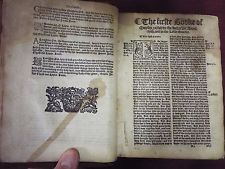
The Cawood Bible

Crown Publisher and Printer to Queen Mary and Queen Elizabethcawood bible

John Cawood

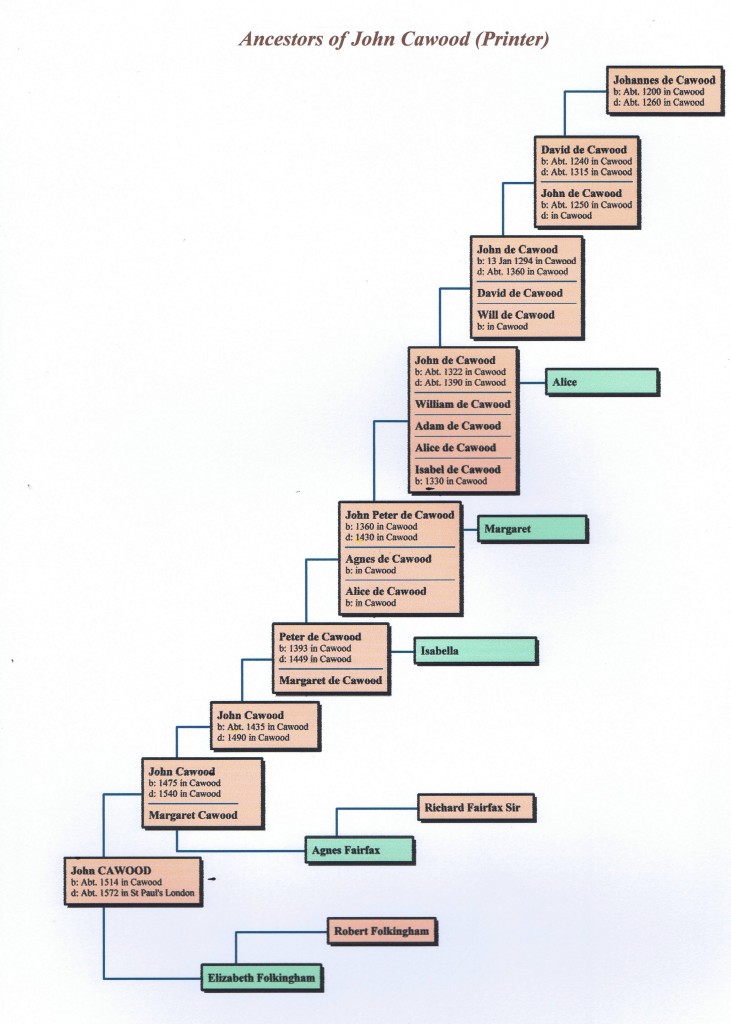
In the latter years of the 15th century, some male members of the Cawood family left Yorkshire for London. John Cawood (grandson of John

Cawood & Agnes Fairfax, direct descend and of Johannes de Cawood)became famous as the Queen’s Printer in the 16th century during the reigns of

Queen Mary I and her half sister, Queen Elizabeth I. He was an original member of the Stationers’ Company, appointed upper warden on May 4th

1556, he was chosen Master in 1561, 1562, and in 1566. Apatent was granted him by Queen Mary, this patent constituded him asRoyal Printer and

crown Publisher. It seems he published all the proclomations of Queen Mary and Queen Elizabeth. The Queen Elizabeth Bible (sometimes called

Cawood Bible) was printed by John Cawood,Royal Printer, there are only 3 original copies left. He printed five copies one New Testament and four

Bibles called the Great Bible Quarto by 1561, three still exist. He alsoprinted some other books which are very collectable and sell for big money. One

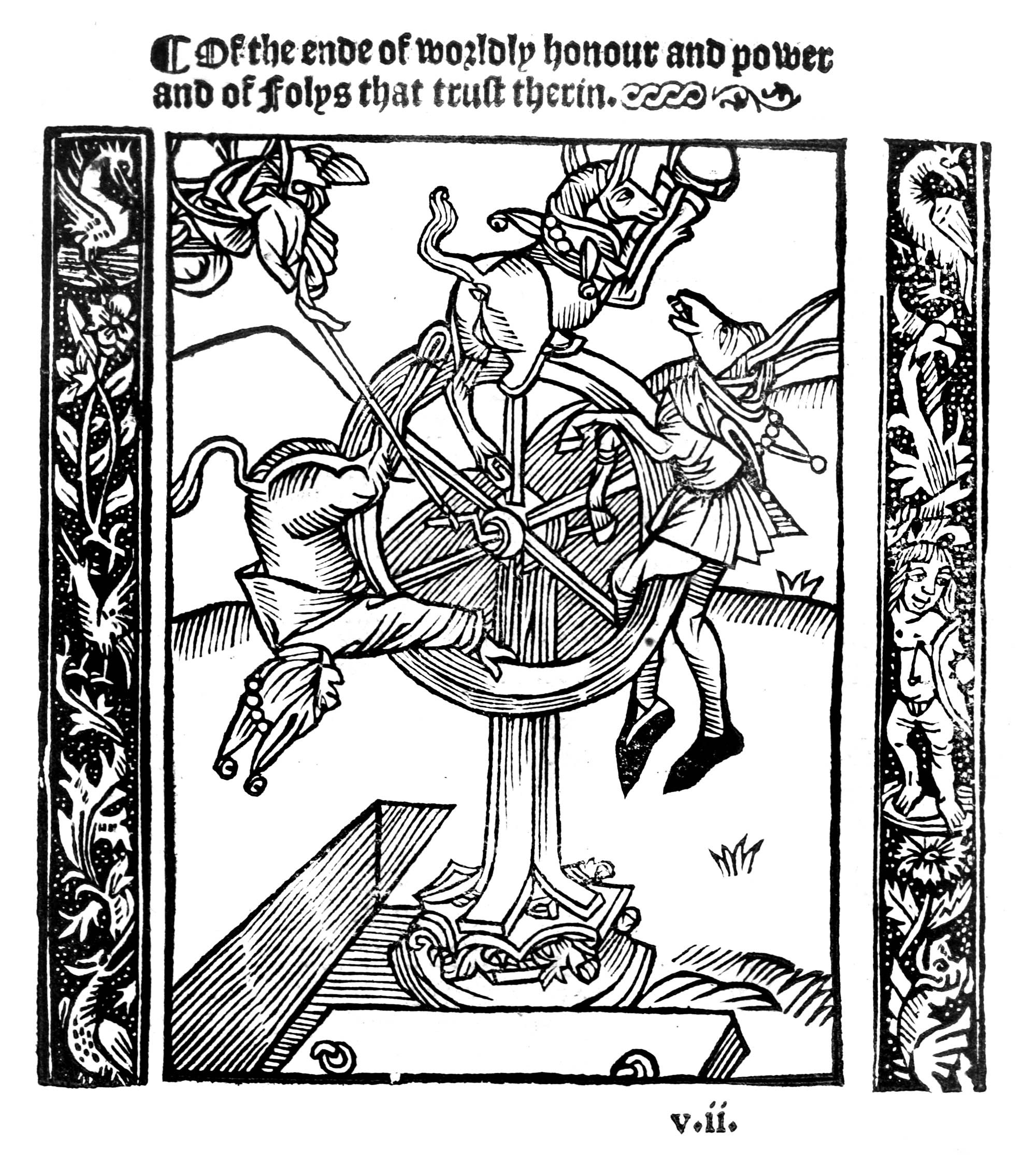
is called “Ship of Fools”

The Homilies: by Dr. Ian Lancashire

Copyright 1994 Ian Lancashire. ISBN 1-896016-00-6

Elizabeth, coming to the throne in early 1559, quickly perceived the homilies to be an important instrument in the settlement of religious conflict, a

precondition of political security. In April 1559 she restored them as official homilies of the Church of England in her 27th and 53rd injunctions to the

clergy and laity.

XXVII. Also, Because through lack of preachers in many places of the queen’s realms and dominions the people continue in ignorance and

blindness, all parsons, vicars, and curates shall read in their churches every Sunday one of the homilies, which are and shall be set forth for the same

purpose by the queen’s authority, in such sort, as they shall be appointed to do in the preface of the same.

LIII. Item, That all ministers and readers of public prayers,chapters, and homilies shall be charged to read leisurely, plainly,and distinctly; and also

such, as are but mean readers, shall peruseover before, once or twice the chapters, and homilies, to the intentthey may read to the better

understanding of the people, and the moreencouragement to godliness. (Cardwell 1844: I.223-24, 231)

With these instructions in mind, the queen’s printers R. Jugge and J.Cawood accordingly issued the first book of homilies in 1559, 1560,1562, and

1563.

From: Printing in England

John Cawood (1514-72) came of an old Yorkshire family of some substance and was apprenticed to John Reynes, who is best known as a book

binder and who died in 1543 or 1544. In 1553 Cawood replaced Richard Grafton as Royal Printer. For his official salary of £6. 13s.4d. per annum,

Cawood was directed to print all ‘statute books, acts,proclamations, injunctions, and other volumes and things, under what name or title soever’ in

English, with the profit appertaining. He was also granted the reversion of Reyner Wolfe’s patent, authorized in1547, for printing Latin, Greek and

Hebrew books, for which he was to receive an additional 16s. 8d. per annum ‘and all other profits and advantages thereto belonging.’ He never enjoyed

this reversion, for he died a year before Wolfe. In 1553 Cawood seems to have acquired a certain amount of printing material from Steven Mierdman,

who on the accession of Mary had been obliged to leave England. In that year a number of books printed by Cawood contain initials formerly used

by Mierdman. Upon the incorporation of the Stationers’ Company in 1557,Cawood was one of the Wardens and he became Master in 1561, 1562 and

1566. During his lifetime Cawood was a great benefactor of the Company, though unfortunately his gifts perished in the Great Fire. As Queen’s Printer

to Mary, Cawood was responsible for printing the proclamations and acts published during her reign, but on the accession of Elizabeth, the

proclamation to that effect was printed by Richard Jugge, who subsequently printed several others and was termed in a letter from the Privy Council

dated 20 December, 1558, ‘the Quenes majesties Prynter.’ On 25 January, 1559, Cawood’s name was conjoined with Jugge’s in the printing of An Acte

whereby certayne offences be made treason, and from that time they continued jointly to print the State papers. Cawood died in 1572, and had been

three times married. His device consisted of his mark and initials.

Page of Bible edited & printed by John Cawood
From: Tyndale-Erasmus 1550 English-Latin Diglot

Under the brief reign of King Edward VI (the successor to King Henry VIII), numerous editions of all English versions were put to press:

Coverdale’s, Matthew’s, the “Great” Bible, and Tyndale’s “foundation”version as well. This volume is the fourth edition of Tyndale’s New Testament;

the editor and publisher (according to the preface), is believed to have been John Cawood of London. Only his initials,”I.C.,” appear on the title page

and Preface. The intention of this superb diglot was to present Tyndale’s English text (given in “Black Letter” type) side by side with Erasmus’ Latin

translation of his Greek Testament (in Roman type), so that those who were familiar with Latin (the traditional language of the church) could then

ascertain the “verity” of Tyndale’s version – as if, some 14 years after Tyndale’s martyrdom, this was still an issue! After all, Tyndale’s version became

the foundation for all subsequent English translations,and 90% of it survives in the King James Version. Only three other examples of this diglot are

recorded in the United States: at the New York Public Library, at Harvard and at the Huntington Library. This octavo-size treasure is listed by Herbert

as #88.

Sources

Ancestry.com: Public Member Trees (Ancestry.com Operations Inc; Provo, UT, USA; 2006) Record for John Cawood & Record for Barbara

Cawood
Dugdale, William. The History of St. Paul’s Cathedral in London, From its Foundation (Edward Maynard, Northamptonshire, England, 1716) Page

127

“John Cawood, Citizen and Stationer of London, Printer to the most renowned Queen’s Majesty, Elizabeth; married three Wives, and had

Issue by Joane the first Wife onely, as followeth, three Sons, four Daughters; John his eldest Son being Bachelour of Law, and Fellow in New

Colledge in Oxenford, died 1570. Mary married to George Bischoppe, Stationer; Isabell married to Thomas Woodcock Stationer. Gabrael, his

second Son, bestowed this dutifull Remembrance of his deare Parents 1591. the Churchwarden. Susanna married to Robert Bullok. Barbara married

to Mark Norton. Edmund third Son died 1570. He (John Cawood) died 1. of Aprill 1572. he being of Age then 58.”

ship o fools john cawoodThis is from “The Ship of Fools”

Humpty Dumpty part of the Cawood Castle Legacy

Humpty Dumpty

Humpty Dumpty sat on a wall.
Humpty Dumpty had a great fall.
All the king’s horses and all the king’s men
Couldn’t put Humpty together again.

History:

That Humpty Dumpty is an egg is not really affirmed in the poem. In its primary printed form, in 1810, it is a puzzle, and exploits for misdirection the information that “humpty dumpty” was 18th-Century reduplicative jargon for a small, awkward being. While a awkward human being falling off a fence would not be irreperably injured, an egg would be. The rhyme is no longer posed as a puzzle, as the response is now so well recognized. Comparable riddles have been recorded by folklorists in additional languages, such as Boule Boule in French, or Thille Lille in Swedish; although none is as extensively recognized as Humpty Dumpty is in English. Humpty Dumpty is a personality in a Mother Goose rhyme, portrayed as an anthropomorphized egg.

In an additional hypothesis, Humpty Dumpty referred to King Richard III of England, the hunchbacked monarch, the “Wall” being either the name of his horse (called “White Surrey” in Shakespeare’s play), or a allusion to the faction who abandoned him. Throughout the battle of Bosworth Field, he fell off his mount and was supposed to have been “hacked into pieces”.

The tale of Cardinal Wolsey’s ruin is depicted in the children’s nursery rhyme of Humpty Dumpty. At length Cawood castle passed to Cardinal Wolsey, who let it descend into disrepair in the near the beginning part of his occupation (1514 – 1530), due to his house at the Court, attachment to temporal relationships and his disregard of his diocesan duties. King Henry VIII sent Wolsey back home in 1523 after he failed to get a divorce from the Pope – a enormous error on Wolsey’s part. Wolsey returned to the fortress and began to restore it to its previous splendor. Though, he was arrested for high treason in November, 1530 and ordered to London for trial. He left on 6 November, but took ill at Leicester and died in the Abbey there on 29 November.

According to an supplement taken from the East Anglia Tourist Board in England, Humpty Dumpty was a powerful cannon throughout the English Civil War. It was mounted on top of the St Mary’s at the Wall Church in Colchester protecting the metropolis against blockade in the summer of 1648. Even though Colchester was a Royalist stronghold, it beleaguered by the Roundheads for 11 weeks before at last falling. The church tower was hit by enemy gun fire and the top of the tower was blown off, sending “Humpty” plummeting to the ground. Logically all the King’s horses and all the King’s tried to repair “him” but in vain. Additional reports have Humpty Dumpty referring to a sniper nicknamed One-Eyed Thompson, who engaged the similar church tower.Humptydumpty

A Brief history of the English Civil War

The Cawoods and their relatives fought on both sides in this conflict and several lost their lives and some lost their possessions and holdings, this is a brief history of this conflict.

The English Civil War The English Civil War started in 1642 when Charles I raised his royal standard in Nottingham. The split between Charles and Parliament was such that neither side was willing to back down over the principles that they held and war was inevitable as a way in which all problems could be solved. The country split into those who supported the king and those who supported Parliament – the classic ingredients for a civil war. As with most wars during the C17th, the English Civil War was not a long continuous war. Armies lacked mobility and the time taken to collect the most basic of equipment meant that there were long periods of time when no fighting was taking place despite England being at war at the time. Theweather was also a major determining factor in whether armies could fight or not. Roads were no more than tracks and the winter could cut them up to make them beyond use. Therefore moving any armies around would be very difficult.

There were only three major battles in the English Civil War – Edge Hill (1642) Marston Moor (1644) and Naseby (1645). While it is difficult to give an exact breakdown of who supported who as there were regional variations, at a general level the nobility, landowners and Anglicans supported Charles I while those in the towns and cities supported Parliament. However, this is a generalisation and there were noblemen who supported Parliament and there were towns such as Newark that supported Charles. The first major battle of the English Civil War was at Edge Hill. While both sides claimed success, there was no decisive result from this battle. The following year, 1643, saw a series of smaller battles that were equally as indecisive in the sense that neither side dealt a fatal blow to the other. In 1643, Oliver Cromwell came more and more to the fore with his desire for a New Model Army. This new force was to have a decisive impact on the course of the English Civil War.

In 1644, Charles lost control of the north of England as a result of a major defeat at the Battle of Marston Moor. The combined armies of Parliament and the Scots heavily defeated the Royalists. In June 1645, Cromwell’s New Model Army inflicted a fatal blow to the king’s army at the Battle of Naseby. Charles did not recover from this defeat and his cause was lost. In 1646, Charles surrendered to the Scots rather than to Parliament. He hoped to take advantage of the fact that the Scottish and Parliamentary alliance was fragile and could collapse at any time. In fact, the Scots took advantage of Charles and sold him to Parliament for £400,000 in January 1647. The problem Parliament now had was what to do with Charles. The king actually helped in his own downfall. In November 1647, he escaped to Carisbrooke Castle on the Isle of Wight and in 1648 the short-lived second civil war broke out. The supporters of the king were defeated at Preston. All that Charles had proved to Parliament was that he could not be trusted. Charles was tried at Westminster Hall in January 1649, and found guilty that he had “traitorously and maliciously levied war against the present Parliament and the people therein represented.” Charles was executed on January 30th, 1649.

The Siege of York, April-July 1644

york 1644
The besiegement of York was a formidable undertaking. Situated at the confluence of the River Ouse and the smaller River Foss, the city commanded the only bridges over the Ouse between Selby and Boroughbridge, making encirclement difficult. The Foss had been dammed close to its confluence with the Ouse shortly after the Norman Conquest, causing the river behind to form a large lake, known as the King’s Fishpond, that protected the north-eastern approaches. The city itself was defended by a continuous circuit of Roman and medieval walls built upon an earthen rampart. Although some of its defences had become ruinous by the first half of the 17th century, King Charles ordered that they should be repaired and strengthened during his four-month stay at York in 1642. An outer ring of earthworks and forts was constructed beyond the walls for additional protection and cannon were mounted on the city’s four main gates (or “bars”) and on the castle which dominated the southern defences. The garrison was well supplied with provisions and was fully manned after the arrival of the Marquis of Newcastle’s northern army on 18 April 1644.

The siege of York, 1644
The besieging armies settled around the city in a great arc, with Lord Fairfax’s army to the east, the Scots to the south and west. A bridge of boats was constructed over the River Ouse at Acaster Malbis a few miles south of York to allow communications between the two armies. Initially, the sector to the north between the Ouse and Foss was left open except for occasional patrols. Before the siege could begin in earnest, the Allies had to secure the surrounding country. Stamford Bridge was captured on 24 April but Allied attacks on Cawood Castle were repulsed. Raiders from the Royalist garrison at Pontefract threatened Allied positions to the south of York while Sir Hugh Cholmley sent raiders from Scarborough to harass those to the east. To the north, the Marquis of Montrose and Sir Robert Clavering captured Morpeth Castle, forcing Lord Leven to send troops from the siege to secure his lines of communication with Scotland. But gradually the Allies consolidated their position. Sir John Meldrum finally captured Cawood Castle on 19 May and outposts were established to contain the Royalist raids.
Early in June 1644, the Earl of Manchester arrived at York with the army of the Eastern Association, having secured Lincolnshire for Parliament with the capture of Lincoln and Gainsborough. Manchester’s arrival brought the total number of Allied troops before York to 25,000. The Eastern Association occupied the previously unguarded northern approaches to complete the encirclement of the city. A second bridge of boats was constructed across the Ouse at Poppleton to establish communication between the armies.
Around the same time, Sir Henry Vane arrived with orders from the Committee for Both Kingdoms for the Allied commanders to march against Prince Rupert, who was gathering a Royalist army across the Pennines in Lancashire. The generals were reluctant to split their forces, however, and Vane eventually acknowledged that they were right to continue the siege. During Vane’s conference with the generals, the possibility of deposing King Charles was openly discussed for the first time. The generals unanimously rejected the idea, and it is possible that the Earl of Manchester’s disillusionment with the Parliamentarian cause began as a result of these discussions.
The first Allied artillery battery was established in Lord Fairfax’s sector and began bombarding the walls of York on 5 June. Two days later, the Covenanters stormed three outlying forts that covered the western approach to the city, two of which were captured. This setback prompted the Marquis of Newcastle to open negotiations for surrender. After an exchange of correspondence with the Allied commanders, a cease-fire was arranged for 14 June when commissioners from both sides met to discuss terms. They were unable to reach agreement. The Allied leaders suspected that Newcastle was playing for time and pressed ahead with plans to carry the city by storm.
Realising that the walls of York were too strong to be breached by artillery fire, the Allies initiated mining operations at two points: in the south-east at Walmgate Bar and in the north-west near St Mary’s Tower. They planned to explode the mines and assault the two breaches simultaneously. On 16 June, however, the mine at St Mary’s was exploded prematurely. Major-General Crawford sent 600 Eastern Association infantry through the breach, but the attack was carried out in isolation. The Royalists counter-attacked and secured the breach. The attackers were cut off and forced to surrender before the Allies could support the assault, suffering up to 300 casualties. No further attempts were made to storm the city. Meanwhile, Prince Rupert’s relief force was preparing to lift the siege of York.

Cawood Castle

Address: Thorpe Lane, Cawood, Selby, YO8 3TS
Opening: The castle is not open to the public, but can be let from the Landmark Trust.

Cawood Castle was a palace for the Archbishop of York, first mentioned in 1181. It was converted into a quadrangular castle from 1374-1388. In 1642, the castle was proclaimed a Royalist stronghold, but in October, Captain Hotham led a force of 500 horse and foot to capture the castle, which was in defiance of a treaty of neutrality between Lord Fairfax and the Yorkshire Royalists.

The Earl of Newcastle resecured York and the surrounding area in December 1642. During the Siege of York, on 24 April 1644, the Parliamentarian attacks on Cawood Castle were repulsed. Finally, Sir John Meldrum’s Parliamentarian forces captured the castle on 19 May, but the Earl of Newcastle briefly recaptured it again in 1644. Shortly after that, Lord Fairfax recaptured it and used it as a prisoner-of-war camp. After the end of the Civil War, the castle was destroyed, with only the gatehouse and the banqueting hall remaining.

Stones from the castle were used to construct the surrounding houses and possibly taken upriver to extend the official residence of the Archbishop of York at Bishopthorpe.

More on John Cawood

JOHN CAWOOD:
In the latter years of the 15th century, some of the male members of the Cawood family left Yorkshire and
established themselves in London, there to seek their fortunes. One of them, John Cawood became
famous as the Queen’s Printer in the middle of the 16th century. The records states that John Cawood,
Queen’s Printer during the reigns of Queen Mary I (1553-1558), and her half-sister, Queen Elizabeth I
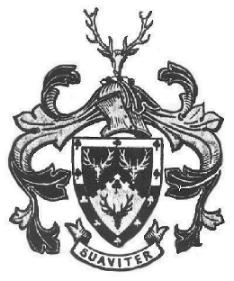
(1558-1603), was a direct descendant of John de Cawood, King Forester, in Yorkshire, and is described as
having arms of the de Cawood of Cawood, near York. According to record, John Cawood was an original
member of the Stationers’ Company, and a bountiful benefactor to them, and was appointed upper warden
in their charter granted by Queen Mary I, and Phillip, 4th May, 1556. He was chosen Master in 1561,
again in 1562, and in 1566. Phillip (King Consort) was king of Spain, and son of Emperor Charles V.
John Cawood exercised the art as Queen’s Printer three or four years before a patent was granted him by
Queen Mary. By the patent John Cawood was constituted Royal Printer and Crown Publisher, and was
granted certain monopolies and privileges.
As Crown Publisher, John Cawood seem to have published all the proclamations of Queen Mary and
Queen Elizabeth. Our Cawood has a photostatic copies of approximately 40 of these. A Bible, sometimes
known as the Cawood Bible, or Queen Elizabeth’s Bible, was printed by John Cawood, Royal Printer.
There are only three copies of the original work known to exist. One can be seen in the Henry Huntington
Library at Pasadena, California, another is in New York Public Library, and the third in the hands of a
private collector in England, whose name we do not know. There are, however, several reproductions
executed by later printers. The printing on the folio of this Bible is a work of art, and a type of work that
accounts for the high reputation John de Cawood held.
In the reign of Queen Elizabeth (1558-1603) John Cawood dwelt in St. Paul’s Churchyard, at the sign of
the “Holy Ghost”, and became partner with Richard Jugge in Queen Elizabeth’s patent.
His epitaph reads, “John Cawood, Citizen and Stationer of London, Printer to the most renowned Queen’s
Majesty, Elizabeth, married three Wives, and had issue by Joane, the first Wife only, as followeth–three
Sons, four Daughters; John his eldest Son being Bachelor of Law, and Fellow in New Colledge in
Oxenford, died 1570. Mary married to George Bischoppe, Stationer; Isabell married to Thomas
Woodcock, Stationer. Gabrael, his second Son, bestowed this dutiful Remembrance of his dear Parents
1591. then Churchwarden. Susanna married to Robert Bullok. Barbara married to Mark Norton. Edmund,
third son, died 1670. “He died 1, of April 1572, be being of Age the 58.” cawoodarms

Stephen Cawood American Immigrant and Indentured Servant 1665

STEPHEN CAWOOD II:
Stephen Cawood II was baptised at Pontefract, England May 11, 1630 (in the reign of King Charles I
(1625-49). The Cawoods of Pontefract ans vicinity are the only ones who have been named Stephen. He
emigrated to America evidently in the latter part of 1665, at the time of the Great Plague which,
seemingly, originating in London, spread over practically all of England. At about the same time, in the
latter months of 1665, the Great Fire of London, occurred, when it was said that in London there were
more people dead than remained alive. The fire left many homeless and this, and the plague may have the
reason that prompted Stephen’s departure from England. He also have been may seeking freedom and the
liberty to progress, which they had been denied for so many years.
Stephen Cawood (now 35 years of age) landed in southern Maryland in 1666, probably in the early part of
that year. He came, as many early settlers as an indentured servant, usually for seven years, in order to
repay the ship owner or captain for his transportation fee for having been brought to America.
According to records found in the Land Office, Annapolis, Maryland, Stephen Cawood of Charles County
proved right to 50 acres of land for time of service performed in the province. This record was dated
February 4, 1670-71. On the same day Thomas Dent of St. Mary’s County sold to Stephen Cawood of
Charles County, 200 acres, part of a warrant for 1500 acres granted to Dent July 9, 1670. Warrant was
then issued to Stephen Cawood for 250 acres. Stephen Cawood’s warrant for 250 acres was increased by
200 acres on October 10, 1674, in a transaction by which Charles Calvert (Lord Baltimore) then
Governor, issued to Stephen Cawood warrant for 200 acres, returnable February 10, 1675. On the same
day October 10, 1674, Charles Calvert assigned to Stephen Cawood four persons—Ann Terret, William
Terret, George Blackmore and Katherine Blackmore, who were under obligation to him. Charles Cavert
had apparently sponsored these four parties and paid for their transportation from England. For a certain
consideration, (money or otherwise), these rights passed to Stephan and he was entitled to 50 acres for
each person. Thus the 200 acres from Charles Calvert.
Having acquired additional land by various transactions, Stephen Cawood, who had labored and waited
for several years to find a suitable location, and now married to Ann Terrett, was at last ready to establish
the first home of the Cawoods in the new country. His rights now amounted to 600 acres, and on May 13,
1675, he was granted warrant for that amount. He chose a location lying on the main branch of the
Mattawoman River by a bounded tree of Hull’s land called “Hopewell.” Patent for this tract was issued
May 8, 1676, by Charles Calvert and it was given the name of “Hull.” This plantation has ever since been
known as Hull. It lies about ten miles south of the District of Columbia, about three miles northeast of the
village of Waldorf in Charles County, and about five miles as the crow flies from the point on the Potomac
River lying opposite Mt. Vernon.
One approaches the plantation of Hull from Waldorf. It sets a quarter of mile from the highway. Hull
belonged to the Cawoods down to about 1790. The house has the appearance of once having been
pretentious, but now has lost much of its former glory. It is a large two story building, with a central hall
extending its entire length. Directly back of the house the land drops rapidly to the Mattawoman basin,
giving an amphitheater effect. There are no ancient graves to be found, but there can be no doubt that
according to the customs of the times, many generations of Cawoods lie buried on these ancestral acres.
Through the union of Stephen Cawood and Ann Terrett most, if not all, of the Cawoods descended. There
are cemeteries in Maryland, Virginia, Indiana, Pennsylvania, Ohio, Kentucky and Tennessee where
Cawoods are buried. Name spellings may vary from Caywood, Kawood, Kaywood, Cawode, Kawode etc.,
but the original in English history was Cawood.
Stephen Cawood engaged in the war with the Susquehannock Indians about 1675, and was killed in the
war sometime in 1676, at the age of 46, leaving his wife, Ann Terrett Cawood, and son Stephen. There
may have been other children. He lies buried near where he fell across the Potomac, directly in view of
now Mt. Vernon, home of our first president.
An act for the relief of Ann Cawood, widow, and her children, was introduced in the assembly of
Burgesses and Delegates on May 16, 1676, passed on June, 1676, providing that in consideration of the
great poverty of Ann Cawood, widow and relict of Stephen Cawood ” lately slain in the service and
defense of this province whose death is the occasion of her and her children’s distress” they pay Ann
Cawood for herself and for her children 1500 pounds of tobacco per annum for the next three years. (See
Maryland Archives, Vol II, Page 563.) She seems to be the only one given a pension for his sacrifice. This
may have been one of the very first, if not the first granted in this country. They must have had more than
one child because the pension application mentions children, but we only know of Stephen because he
was old enough (age 14) in 1684 to have witnessed a will.
Immigrant as an *indentured servent to the MD colony; d Abt November 1676, Charles Co., MD killed in a war with indians

Children of Steven Cawood II and Ann Terrett are:

Stephen Cawood III:
STEPHEN CAWOOD III:
Stephen continued to live with his mother and step-father until he was of age. In 1695 he returned to
Charles County to assume possession of his heritage, a plantation of 600 acres, called Hull.
Stephen III made his will September 9, 1735, and it was probated October 15, 1735. He made bequest to
son, John Cawood, part of “Hull”, the balance of “Hull”, to sons William, Thomas, and Stephen Cawood;
he also made bequest to wife, Mary Cawood; to daughters Ann Thomas, Mary Willett, Hester Robinson,
and Penelope Roby; to children of daughter Ann Thomas, by her deceased husband, William Atchison.
Stephen Cawood III died in October of 1735. In his inventory, dated December 19, 1735, are mentioned
six slaves, also a large plantation, which seems to have been well stocked with horses, cattle, and hogs. He
also had a large number of fowl, and various implements, etc, are mentioned. He also had listed many
articles of furniture which had probably been importrd from England and were of the Queen Anne Period,
or some older period.
Mary Cox Cawood, the widow died about March, 1748.
w died about March 1748.
More About Stephen Cawood III:
Date born 2: 167087
More About Stephen Cawood III and Mary Cox:
Marriage: 1690, St Marys Co, MD.87
Children of Stephen Cawood III and Mary Cox are:
+John Cawood, b. 1693, St Marys Co, MD, d. 1769, Berkley,WV.Family-tree-for-Cawoods-731x1024