
Crown Publisher and Printer to Queen Mary and Queen Elizabeth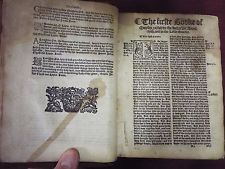
John Cawood
In the latter years of the 15th century, some male members of the Cawood family left Yorkshire for London. John Cawood (grandson of John
Cawood & Agnes Fairfax, direct descend and of Johannes de Cawood)became famous as the Queen’s Printer in the 16th century during the reigns of
Queen Mary I and her half sister, Queen Elizabeth I. He was an original member of the Stationers’ Company, appointed upper warden on May 4th
1556, he was chosen Master in 1561, 1562, and in 1566. Apatent was granted him by Queen Mary, this patent constituded him asRoyal Printer and
crown Publisher. It seems he published all the proclomations of Queen Mary and Queen Elizabeth. The Queen Elizabeth Bible (sometimes called
Cawood Bible) was printed by John Cawood,Royal Printer, there are only 3 original copies left. He printed five copies one New Testament and four
Bibles called the Great Bible Quarto by 1561, three still exist. He alsoprinted some other books which are very collectable and sell for big money. One
is called “Ship of Fools”
The Homilies: by Dr. Ian Lancashire
Copyright 1994 Ian Lancashire. ISBN 1-896016-00-6
Elizabeth, coming to the throne in early 1559, quickly perceived the homilies to be an important instrument in the settlement of religious conflict, a
precondition of political security. In April 1559 she restored them as official homilies of the Church of England in her 27th and 53rd injunctions to the
clergy and laity.
XXVII. Also, Because through lack of preachers in many places of the queen’s realms and dominions the people continue in ignorance and
blindness, all parsons, vicars, and curates shall read in their churches every Sunday one of the homilies, which are and shall be set forth for the same
purpose by the queen’s authority, in such sort, as they shall be appointed to do in the preface of the same.
LIII. Item, That all ministers and readers of public prayers,chapters, and homilies shall be charged to read leisurely, plainly,and distinctly; and also
such, as are but mean readers, shall peruseover before, once or twice the chapters, and homilies, to the intentthey may read to the better
understanding of the people, and the moreencouragement to godliness. (Cardwell 1844: I.223-24, 231)
With these instructions in mind, the queen’s printers R. Jugge and J.Cawood accordingly issued the first book of homilies in 1559, 1560,1562, and
1563.
From: Printing in England
John Cawood (1514-72) came of an old Yorkshire family of some substance and was apprenticed to John Reynes, who is best known as a book
binder and who died in 1543 or 1544. In 1553 Cawood replaced Richard Grafton as Royal Printer. For his official salary of £6. 13s.4d. per annum,
Cawood was directed to print all statute books, acts,proclamations, injunctions, and other volumes and things, under what name or title soever in
English, with the profit appertaining. He was also granted the reversion of Reyner Wolfes patent, authorized in1547, for printing Latin, Greek and
Hebrew books, for which he was to receive an additional 16s. 8d. per annum and all other profits and advantages thereto belonging. He never enjoyed
this reversion, for he died a year before Wolfe. In 1553 Cawood seems to have acquired a certain amount of printing material from Steven Mierdman,
who on the accession of Mary had been obliged to leave England. In that year a number of books printed by Cawood contain initials formerly used
by Mierdman. Upon the incorporation of the Stationers Company in 1557,Cawood was one of the Wardens and he became Master in 1561, 1562 and
1566. During his lifetime Cawood was a great benefactor of the Company, though unfortunately his gifts perished in the Great Fire. As Queens Printer
to Mary, Cawood was responsible for printing the proclamations and acts published during her reign, but on the accession of Elizabeth, the
proclamation to that effect was printed by Richard Jugge, who subsequently printed several others and was termed in a letter from the Privy Council
dated 20 December, 1558, the Quenes majesties Prynter. On 25 January, 1559, Cawoods name was conjoined with Jugges in the printing of An Acte
whereby certayne offences be made treason, and from that time they continued jointly to print the State papers. Cawood died in 1572, and had been
three times married. His device consisted of his mark and initials.
Page of Bible edited & printed by John Cawood
From: Tyndale-Erasmus 1550 English-Latin Diglot
Under the brief reign of King Edward VI (the successor to King Henry VIII), numerous editions of all English versions were put to press:
Coverdale’s, Matthew’s, the “Great” Bible, and Tyndale’s “foundation”version as well. This volume is the fourth edition of Tyndale’s New Testament;
the editor and publisher (according to the preface), is believed to have been John Cawood of London. Only his initials,”I.C.,” appear on the title page
and Preface. The intention of this superb diglot was to present Tyndale’s English text (given in “Black Letter” type) side by side with Erasmus’ Latin
translation of his Greek Testament (in Roman type), so that those who were familiar with Latin (the traditional language of the church) could then
ascertain the “verity” of Tyndale’s version – as if, some 14 years after Tyndale’s martyrdom, this was still an issue! After all, Tyndale’s version became
the foundation for all subsequent English translations,and 90% of it survives in the King James Version. Only three other examples of this diglot are
recorded in the United States: at the New York Public Library, at Harvard and at the Huntington Library. This octavo-size treasure is listed by Herbert
as #88.
Sources
Ancestry.com: Public Member Trees (Ancestry.com Operations Inc; Provo, UT, USA; 2006) Record for John Cawood & Record for Barbara
Cawood
Dugdale, William. The History of St. Paul’s Cathedral in London, From its Foundation (Edward Maynard, Northamptonshire, England, 1716) Page
127
“John Cawood, Citizen and Stationer of London, Printer to the most renowned Queen’s Majesty, Elizabeth; married three Wives, and had
Issue by Joane the first Wife onely, as followeth, three Sons, four Daughters; John his eldest Son being Bachelour of Law, and Fellow in New
Colledge in Oxenford, died 1570. Mary married to George Bischoppe, Stationer; Isabell married to Thomas Woodcock Stationer. Gabrael, his
second Son, bestowed this dutifull Remembrance of his deare Parents 1591. the Churchwarden. Susanna married to Robert Bullok. Barbara married
to Mark Norton. Edmund third Son died 1570. He (John Cawood) died 1. of Aprill 1572. he being of Age then 58.”
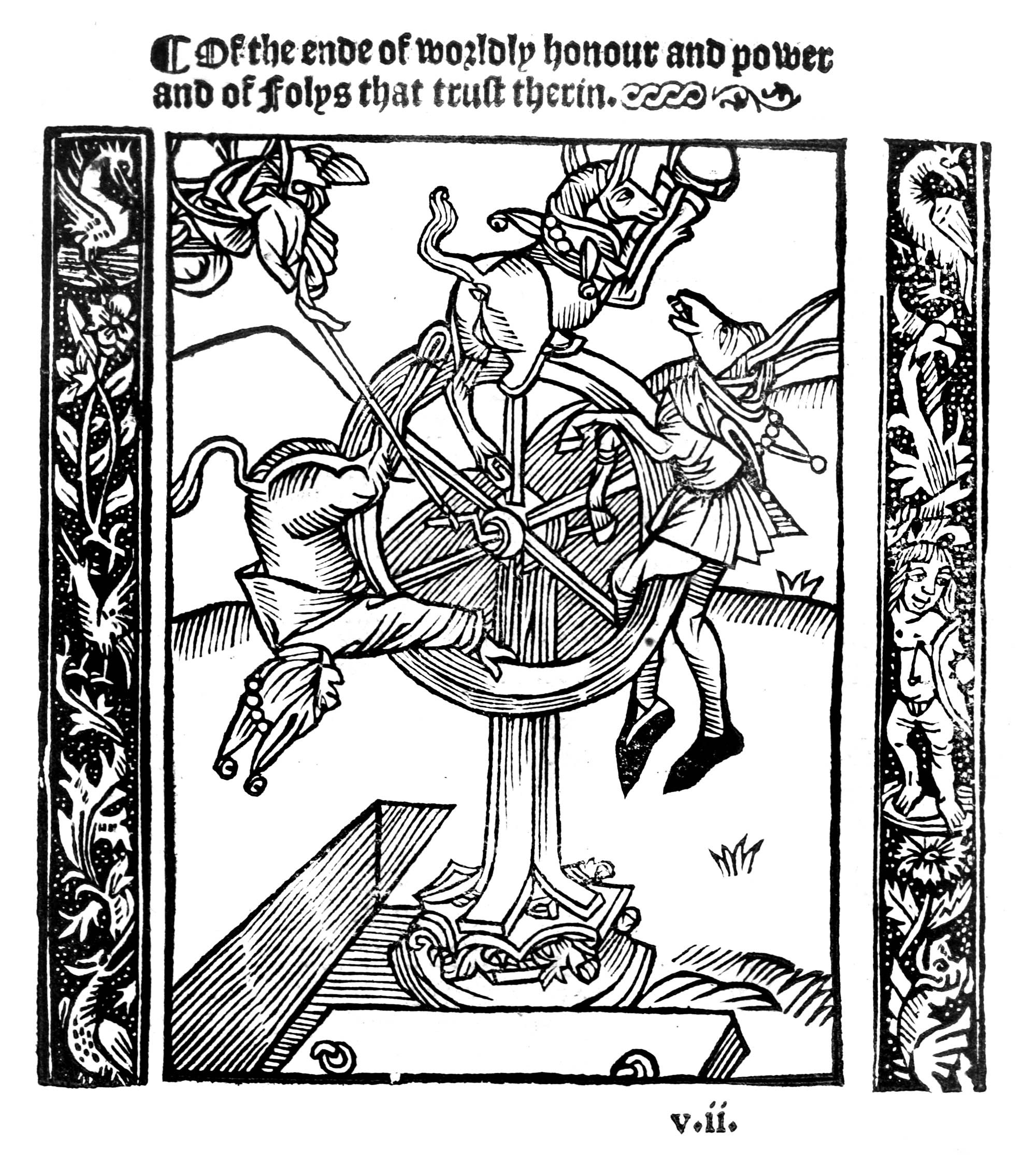 This is from “The Ship of Fools”
 Cawood History