
Thanksgiving at Cawood Castle

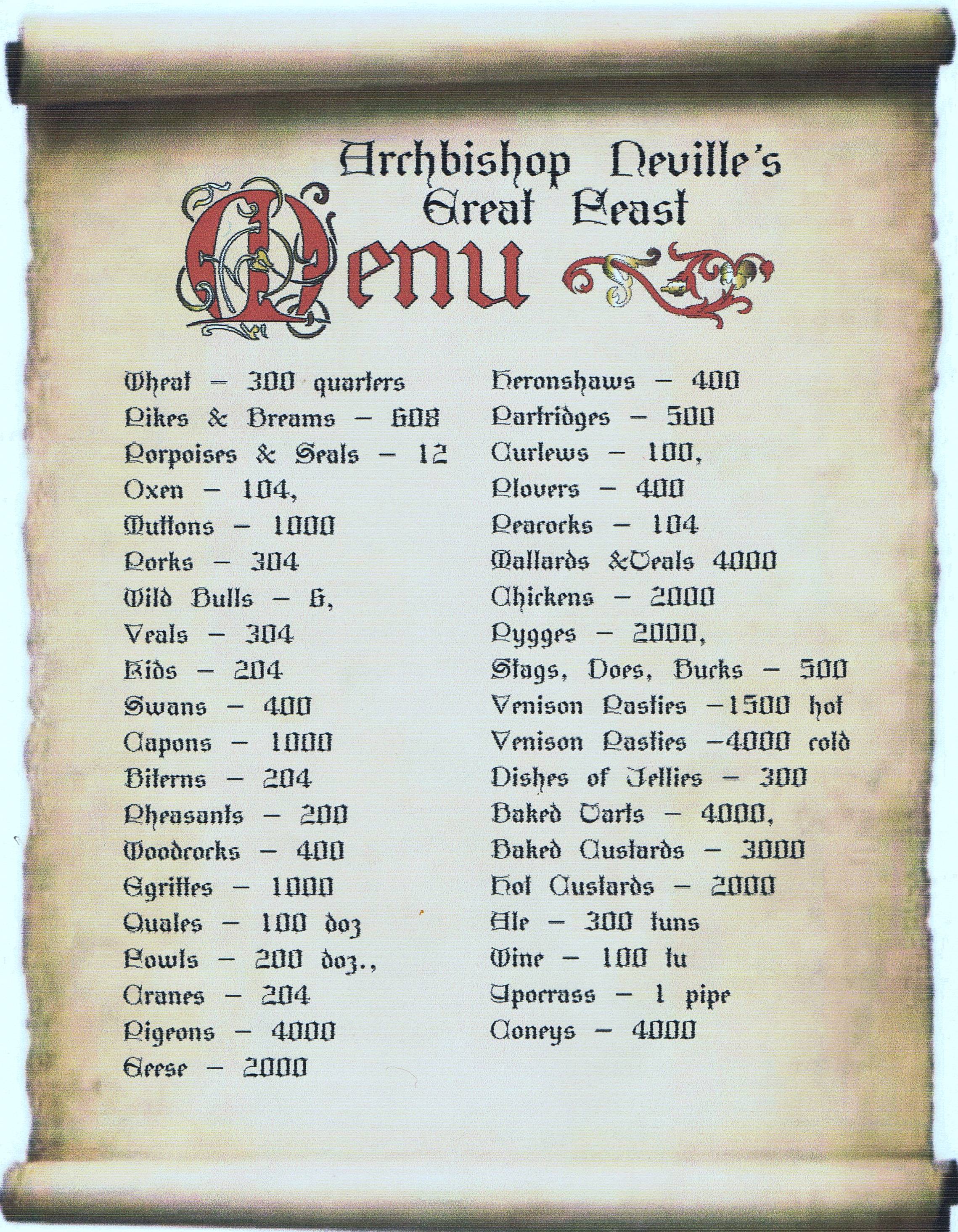
Great-feast-list a

Thanksgiving Overload? Try This For A Feast Posted by Eric Hopton in An English Angle, Seasonal

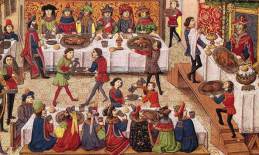
Nov 27, 13Thanksgiving Overload? Try This For A Feast Any excuse will do. We all love a blowout don’t we? At Thanksgiving or Christmas the traditional turkey is the belly-busting bird of choice for many families. And let’s face it, a turkey is a big bird even when de-feathered, gutted, stuffed and roasted. Sometimes we just have to just stretch those stomach muscles from the inside. But if you think your annual Thanksgiving fare is ever so slightly over-indulgent, you might feel a little better when I tell you about a rather more elaborate feast that took place just down the road from where I live in Yorkshire, England, a few years ago; well, 548 years ago to be precise.

The year was 1465. A certain George Neville had been appointed Archbishop of York the year before and had taken up residence in Cawood Castle, which was the traditional residence of that esteemed office. Neville was no monastic recluse. It seems that, for a “man of the cloth,” he liked to party. Neville wanted to celebrate his appointment in style with the aim of up-staging the English Monarchy’s Coronation celebrations. What followed was to become known as the Great Feast of Cawood.

Nobody knows for sure how long the feast lasted, but it was probably more than a week. There are, as always, various accounts, but what follows is an idea of the scale of what was on offer.

Let’s start with the feathered food. There were 400 Swans, 1,000 Capons, 204 Bitterns, 200 Pheasants, 400 Woodcocks, 1,000 Egrets, 1,200 Quails, 2,400 Fowles, 204 Cranes, 4,000 Pigeons, 2,000 Geese, 400 Herons, 500 Partridges, 100 Curlews, 400 Plovers, 104 Peacocks, 4,000 Mallards and Teals, and 2,000 Chickens.

If red meat is more to your taste you could have taken your fill from 104 Oxen, 1,000 Sheep, 2,304 “Porks and Pigges,” six Wild Bulls, 304 “Veals,” 204 Goats, 4,000 Rabbits, and finally — if you are partial to a bit of venison — there were 500 “Stags, Does, and Bucks.”

Pie lovers could definitely go supersize on Venison Pasties with 1,500 hot and 4,000 cold ones to choose from.

Fish freaks were catered for with 608 Pikes and Breams along with 12 Porpoises and Seals.

Got a sweet tooth? You could finish off with 300 “Dishes of Jellies,” 4,000 Baked Tarts, 3,000 Baked Custards, or 2,000 Hot Custards.

I know what you are thinking; all this gluttony is thirsty work. What about the booze? Well, there were 100 Tuns of Wine and 300 Tuns of Ale. A Tun was around 252 US gallons!

The guest list ran to around 2,500 and included 59 Knights, 28 Peers, ten Abbots, seven Bishops, as well as lawyers, clergy, squires, and “ladies.” It required a thousand cooks and the same number of “kitcheners and scullions” to prepare all that food. Over a thousand servants waited at tables.

The Archbishop must indeed have felt like Royalty, but sadly for him meddling in the affairs of Kings cost him dearly. He switched allegiances between Edward IV and Henry VI once too often and was arrested twice and charged with treason. He was held in the Tower of London on one occasion, stripped of his office, and died in 1476 a broken man.

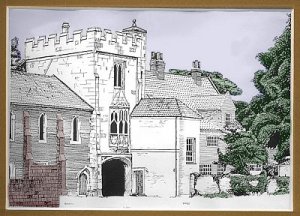
Not much remains of the original Cawood Castle but the magnificent Gatehouse still stands and every time I drive past it I think of that incredible Feast. Let’s all toast old George this Thanksgiving
http://blogs.redorbit.com/thanksgiving-overload-try-this-for-a-feast/
http://archive.is/P1Dmu
http://www.christianforumsite.com/threads/creation-theory-causes-birth-of-a-ring.34387/
the-yorkshire-journal-winter-2014_the-great-feast-of-cawood

Stephen Cawood II Immigrates from Troubled London 1666

It seems Stephen Cawood I trouble started with King charles the I and

his religious policies regarding Presbyterians , Catholics ,Anglicans,

Protestants and others. This is all pretty complicated so I will try to make

this much simpler by saying King Charles tried to bring England under one

religion which did not work out very well, he was an Anglican married to a

French catholic whom he allowed to practice her religion openly. He

insisted on conformity among all religions in all three kingdoms of Great

Britain. He tried to force the Scottish church to use the Anglican and

laudian Prayer Book and started what is called the bishops wars. To

finance this he was forced to recall Parliament in 1640 bringing his 11 year

private rule to an end. At first it was called the Short Parliament then

reformed into the Long Parliament. Practically everyone in the Parliament

were opposed to King Charles’s religious policies .John Pym in the House

of Commons and a small group of Puritan nobles blamed Archbishop Laud

and the Earl of Strafford with great success, they were impeached and

condemned to death with no interference from Charles.
In 1641 The Irish Rebelled and there was then a great argument over who

would control the Army sent to quell the uprising, Parliament or the king.

King Charles tried to have his top 5 opponents in Parliament arrested but

this backfired on him and actually started the English Civil War between the

Parliamentarians and the royalists loyal to the king .There is much more to

the English Civil War than we will go into here and get back to the Cawood

Family. Stephen Cawood I was a supporter of the Parliamentary Party and to the Anglican

Church.He was a “round head “, a Puritan who wore his hair short contrary to those who wore wigs of long hair.  Stephen Cawood’s son Stephen was on the royalist side who lost,

and was apparently disinherited of the family fortune, when

Stephen the I st died he left everything to a trust .In his will dated January ,9, !653 he left his property in East Harwick, Aackworth, Pontifract, Hemsworth

and Kinsley to 6 Trustees to sell the land and use the money to build a

chapel and a free school in East Hardwick, while the money from the rest

of his Estate was to be used to pay and maintain a schoolmaster and

preaching minister to the relief of the poor. He then died forty days after the

execution of his will . He left nothing to his sons because of their rebellions

choices and lifestyles he did not approve of.
For the next few years Stephen the II was most likely in the Army then

started a small tavern business in London until the Plague came.
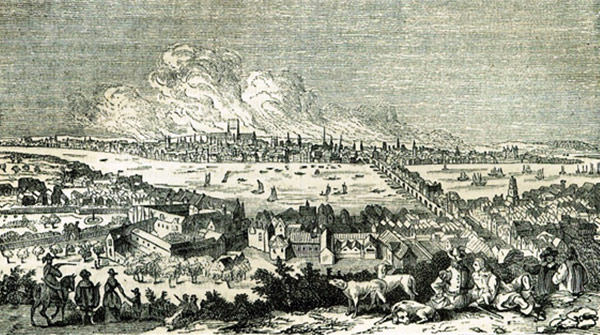
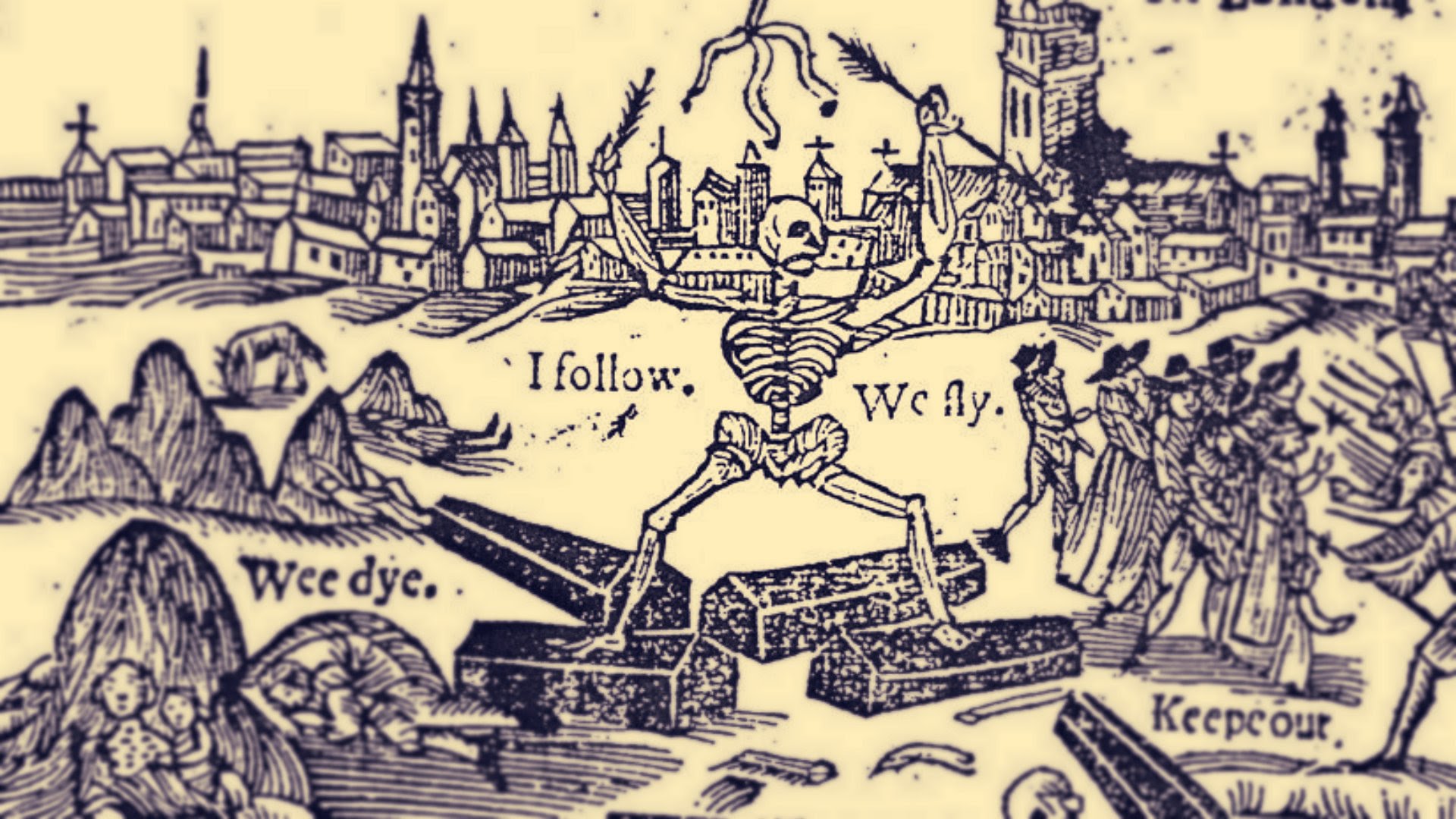
1665 London was a filthy place to live, people threw their trash right out

into the streets that were alive with rats. also it was a very hot long summer

that year and the Plague was able to spread. this was a popular poem of the

time,
“Ring-a-ring of roses,
A pocketful of posies,
Attischo, Attischo,
We all fall down.”
Most wealthy peole left London and a militia was hired to keep those

with the Plague in the city. Any family suspected of having the Plague was

locked in their house for 40 days, a red cross was painted on the door.

searchers were hired to find dead bodied of Plague victims, they would

haul a cart and yell “Bring out yer Dead” through the streets, they were then

hauled to a mass grave and diposed of. Unqualified people known as

Plague doctors and Plague nurses were paid to visit the sick and bring food

which mostly they sold or stole from the people, most real doctors and

nurses had left town. A man named Nathaniel hodges believed it could be

sweated out of a person and encouraged those with it to create heat by

burning things and creating a lot of smoke to get rid of it. The Plague raged on throughout that year and intoplague an fire 1665 londonplague 1665 the end of 1666.

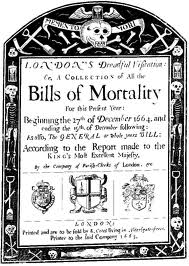
London required each parish to submit a bill of mortality each week, a

common sight was a red cross on the door with these words written on it

“Lord have mercy on us”.
Stephen cawood II left England as an Indentured servant to pay his

passage to Maryland in 1666 a couple of months before the Great Fire of

london in september 1666 which is credited with stopping the Plague of

London.
plague bill of mortality

Sister Cawood

In the 1600’s The Cawoods Immigrated to different parts of the Brittish Empire, Australia, America, South Africa and India.

Cawood, Dorothy Gwendoline…Sister Dorothy Cawood – Marilyn (soprano)
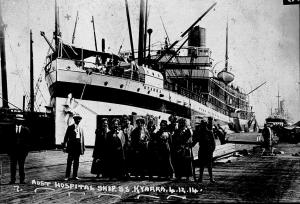
The Kyarra and nurses

Dorothy Cawood (1884 – 1962) undertook her nursing training between 1909—1913 at the isolated Coast Hospital at La Perouse, famous for turning out ‘tough’ nurses.

Dorothy enlisted in the Australian Imperial Force on 14 November 1914 as a staff nurse in the Army Nursing Service, and embarked on HMAT Kyarra 28 November 1914 with the second convoy from Australasia. She arrived Egypt, and was based at the 2nd Australian General Hospital (2AGH) at Mena and Ghezireh, on the outskirts of Cairo, where she served during the Gallipoli campaign. In December 1915 she was promoted to Sister.

Following the wind-down of the Gallipoli campaign, Sister Cawood embarked for France with the 2AGH and served at Marseilles and Wimereux, near Boulogne. She was also briefly attached to the 8th Stationary Hospital and the Australian Voluntary Hospital before returning to 2AGH in July 1916.
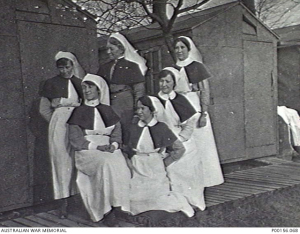
Nurses at Trois Arbres (2nd ACCS)

Nurses at Trois Arbres (2nd ACCS)

By December 1916 Sister Cawood’s nursing duties brought her closer to the front and into more immediate danger. Nursing at the 2nd Australian Casualty Clearing Station at Trois Arbres near Armentières during July 1917, Sister Cawood along with Sisters Clare Deacon, Alice Ross-King and Staff Nurse Derrer, risked their lives to rescue patients trapped in burning buildings after a German air raid. In September the four became the first members of the Australian Army Nursing Service to be awarded Military Medals, the highest military honour then granted to a woman. Dorothy later wrote to her parents: ‘Do not blame me for this. It is Fritz’s fault. He will do these dastardly tricks’.

(Sister Cawood received her medal in a ceremony at Buckingham Palace on February 13th, 1919.)

On 1 August Sister Cawood was transferred to the 38th Stationary Hospital at Calais and, in November, to the 6th Australian General Hospital. While serving there she was mentioned in dispatches for ‘distinguished and gallant service in the field’. Not long afterwards Sister Cawood was transferred to the Genoa, Italy, with the 38th Stationary Hospital. She was hospitalised with tonsillitis for a few months in 1918, but served in Genoa until January 1919. She was then transferred to Australian Auxiliary Hospitals in England until her repatriation in May, 1919.

Sister Cawood returned to Sydney after more than four years overseas. After being demobilised she worked in the State Hospital at Liverpool, New South Wales, before becoming matron of the David Berry Hospital in Berry. She retired in 1943 and the following year returned to Parramatta where she lived until her death in 1962. She had never married and was buried in Sydney’s Rookwood cemetery.

I have the vaguest childhood memory of a small lady, rather severe in aspect to a small child. My uncle remembers her as being very softly spoken.

The interest in this story lies in its window on the WWI nursing service. This award of the Military Medal to Australian nurses was not controversial at the time, but is now. Our nurses officially held officer status. The Military Medal was for soldiers, not officers. Officers (including other non-combatants) were awarded the Military Cross for gallantry in action. There were only seven Military Medals awarded to Australian nurses. Historians say that there is no doubt that the award of those Military Medals to that very select group of nurses was an act of discrimination; they should all have been Military Crosses.
Royal Red Cross

Royal Red Cross

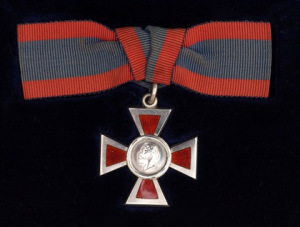
Sister Cawood was also awarded the ARRC—Royal Red Cross, a highly esteemed award for military nursing. Only about 7,000 ARRCs have been awarded throughout the British Empire and British Commonwealth from its institution in 1883 to the present day. The corresponding figure for the Victoria Cross is about 1,000. It is interesting to note that this year is also the Centenary of the Australian Red Cross.

Marilyn

Sister Cawood’s war service is commemorated at Parramatta and District Great War Roll of Honour, and at St Johns Anglican Cathedral Parramatta – Memorial Arch

More information about the events of 22 July 1917

Excerpt of diary entry by Sister Alice Ross-King http://throughtheselines.com.au/research/alice-ross-king

Australian War Memorial entry for Sister Dorothy Cawood http://www.awm.gov.au/people/P10676555/sister cawoods medal sister cawoods ship sister dorothy cawood