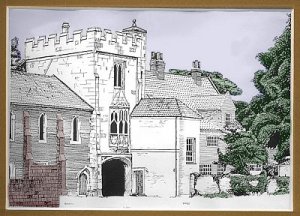

It seems Stephen Cawood I trouble started with King charles the I and
his religious policies regarding Presbyterians , Catholics ,Anglicans,
Protestants and others. This is all pretty complicated so I will try to make
this much simpler by saying King Charles tried to bring England under one
religion which did not work out very well, he was an Anglican married to a
French catholic whom he allowed to practice her religion openly. He
insisted on conformity among all religions in all three kingdoms of Great
Britain. He tried to force the Scottish church to use the Anglican and
laudian Prayer Book and started what is called the bishops wars. To
finance this he was forced to recall Parliament in 1640 bringing his 11 year
private rule to an end. At first it was called the Short Parliament then
reformed into the Long Parliament. Practically everyone in the Parliament
were opposed to King Charles’s religious policies .John Pym in the House
of Commons and a small group of Puritan nobles blamed Archbishop Laud
and the Earl of Strafford with great success, they were impeached and
condemned to death with no interference from Charles.
In 1641 The Irish Rebelled and there was then a great argument over who
would control the Army sent to quell the uprising, Parliament or the king.
King Charles tried to have his top 5 opponents in Parliament arrested but
this backfired on him and actually started the English Civil War between the
Parliamentarians and the royalists loyal to the king .There is much more to
the English Civil War than we will go into here and get back to the Cawood
Family. Stephen Cawood I was a supporter of the Parliamentary Party and to the Anglican
Church.He was a “round head “, a Puritan who wore his hair short contrary to those who wore wigs of long hair. Stephen Cawood’s son Stephen was on the royalist side who lost,
and was apparently disinherited of the family fortune, when
Stephen the I st died he left everything to a trust .In his will dated January ,9, !653 he left his property in East Harwick, Aackworth, Pontifract, Hemsworth
and Kinsley to 6 Trustees to sell the land and use the money to build a
chapel and a free school in East Hardwick, while the money from the rest
of his Estate was to be used to pay and maintain a schoolmaster and
preaching minister to the relief of the poor. He then died forty days after the
execution of his will . He left nothing to his sons because of their rebellions
choices and lifestyles he did not approve of.
For the next few years Stephen the II was most likely in the Army then
started a small tavern business in London until the Plague came.
1665 London was a filthy place to live, people threw their trash right out
into the streets that were alive with rats. also it was a very hot long summer
that year and the Plague was able to spread. this was a popular poem of the
time,
“Ring-a-ring of roses,
A pocketful of posies,
Attischo, Attischo,
We all fall down.”
Most wealthy peole left London and a militia was hired to keep those
with the Plague in the city. Any family suspected of having the Plague was
locked in their house for 40 days, a red cross was painted on the door.
searchers were hired to find dead bodied of Plague victims, they would
haul a cart and yell “Bring out yer Dead” through the streets, they were then
hauled to a mass grave and diposed of. Unqualified people known as
Plague doctors and Plague nurses were paid to visit the sick and bring food
which mostly they sold or stole from the people, most real doctors and
nurses had left town. A man named Nathaniel hodges believed it could be
sweated out of a person and encouraged those with it to create heat by
burning things and creating a lot of smoke to get rid of it. The Plague raged on throughout that year and into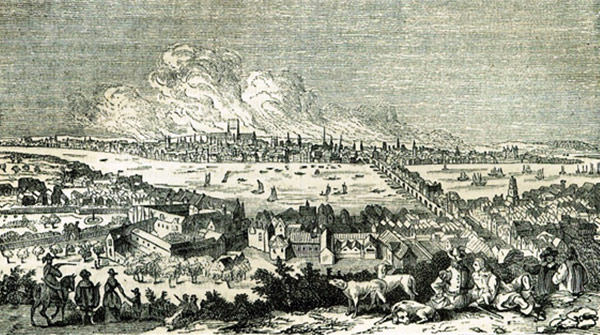
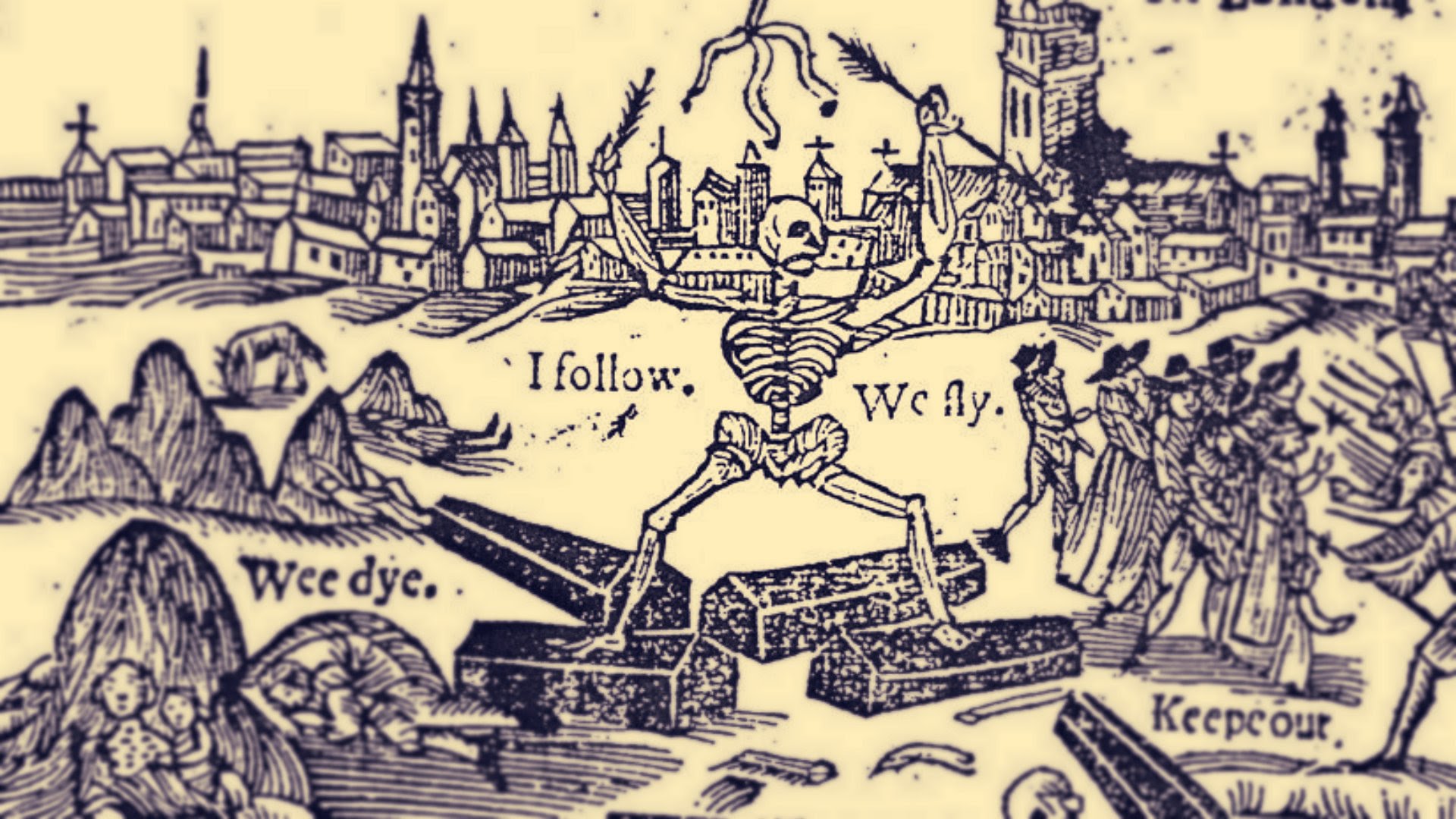 the end of 1666.
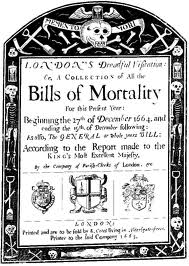
London required each parish to submit a bill of mortality each week, a
common sight was a red cross on the door with these words written on it
“Lord have mercy on us”.
Stephen cawood II left England as an Indentured servant to pay his
passage to Maryland in 1666 a couple of months before the Great Fire of
london in september 1666 which is credited with stopping the Plague of
London.
 Cawood History