
1066 Cawood and Haleys Comet at The Battle of Fulford

The first record of a de Cawood family in the village of Cawood is in 1201 .

Johannes de Cawood was a King’s Forester in the Ouse and Derwent Forest from Henry lll’s patent rolls in 1200. He had been instructed to walk the the bounds of the forest to mark it out.

In 1066 A year of great importance to all the families of England including the Cawoods who at this time were no doubt involved in the Battle of Fulford. This was the year of Haley’s comet which was visible every night  for around three weeks.  Many declared it meant bad omens while others said it meant good omens, it just depended on where you were at the time and whose side you were on. Harold of Wessex had taken the crown from his dieing father and left his brother , Tostig out of any inheritance. Tostig went to The Norwegian King Harold and offered him land and richs if he would help him gain the throne. The Vikings landed in the north and marched south down the coast with ships along the coast which turned into the river Ouse at Hull and sailed inland as far as they could with no resistance because the armies of England were waiting for the Normans to invade at the same time under William, later known as the Conqueror. The small village of Cawood lay near Ricall and was a logical crossing place on the Ouse river on the way to the city of york. They built a bridge of boats near the village of Cawood ,which they no doubt pillaged, on their way toward Fulford. In these days the Anglo-saxon men were required to be available for military service for a limited time and I have no doubt that the Cawoods were there. Also there was a Viking sword found in the river Ouse near Cawood which dates to around this time and was probably lost in a fight crossing that bridge of boats at Cawood, of course I am just supposing here but seems logical to assume since no one knows for sure.I have included information about the Cawood Sword in earlier  blogs.The Cawood sword was found inCawood swordthe River Ouse near Cawood in North Yorkshire in the
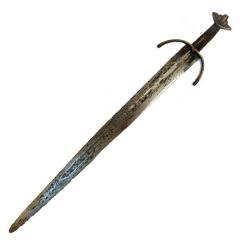
late 19th century. The blade is of Oakeshott type XII and
has inscriptions on both sides. It most likely dates to the
early 12th century.
The sword is notable as the best-preserved specimen of a
small group of medieval swords with a type M pommel in
the typology of Oakeshott (1964). This type of pommel is
an apparently specifically British derivation of the Viking
Age multi-lobed pommel. It is often found on tomb effigies
of the mid 13th to mid 14th century in southern
Scotland and northern England,[1] but it may have been
in existence since the 11th century.

I have this exerpt from Snorri’s saga;

Snorri’s Saga says:
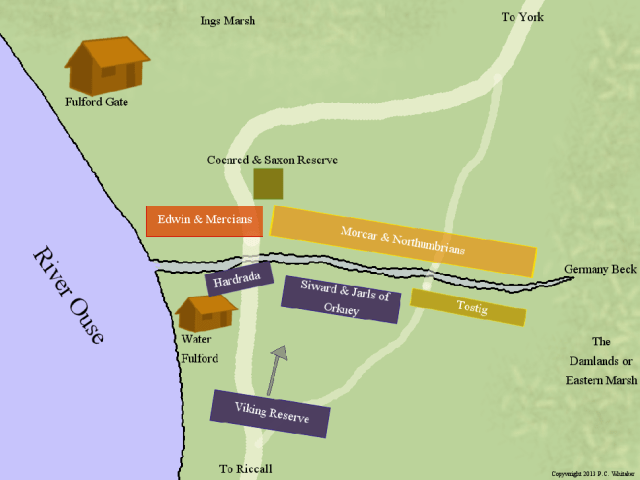
King Harald lay in the Usa (Ouse). King Harald now went on the land, and drew up his men. The one arm of this line stood at the outer edge of the river, the other turned up towards the land along a ditch; and there was also a morass, deep, broad, and full of water.

The earls let their army proceed slowly down along the ditch, with all their troops in line. The king’s banner was next the river, where the line was thickest. It was thinnest at the ditch, where also the weakest of the men were.

When the earls advanced downwards along the ditch, the arm of the Northmen’s line which was at the ditch gave way; and the Englishmen followed, thinking the Northmen would fly. The banner of Earl Morukare advanced then bravely.

When King Harald saw that the English array had come to the ditch against him, he ordered the charge to be sounded, and urged on his men. He ordered the banner which was called the Land-ravager to be carried before him, and made so severe an assault that all had to give way before it; and there was a great loss among the men of the earls, and they soon broke into flight, some running up the river, some down, and the most leaping into the ditch, which was so filled with dead that the Norsemen could go dry-foot over the fen.

There Earl Morukare fell. Earl Valthiof, (Edwin) and the people who escaped, fled up to the castle of York; and there the greatest loss of men had been.fulford a
The Battle of Fulford

BY DAVID ROSS, EDITOR

20 September 1066

Fulford, near York, Yorkshire (then capital of Northumbria)

Saxon troops of Mercia and Northumbria, under Earl Edwin and Earl Morcar, respectively vs. a Norse army under King Harald Hardrada, with the aid of Earl Tostig, brother of King Harold Godwinson of England

King Edward the Confessor of England died in 1065. In his place, Harold, Earl of Wessex, took the throne. But the succession was not a smooth one; two other nobles claimed the crown; Harald Hardrada, King of Norway, and William, Duke of Normandy. While William gathered a fleet and waited for favourable winds to sail across the Channel to the south coast of England, Harald gathered an invasion force in the north. The very winds that kept William waiting impatiently in Normandy helped speed Harald’s fleet of longships across the North Sea. To support him he had the exiled brother of King Harold, Earl Tostig.

Harald sailed from Norway to the mouth of the Tyne, where he joined with Tostig. Tostig claimed the Earldom of Northumbria, and was quite ready to support Harald in his invasion in return for help in gaining the Earldom, Together they sacked and burned Scarborough, and sailed up the Humber.

The combined forces of Harald and Tostig must have been formidable; even allowing for exaggeration of their strength in contemporary reports, it seems likely that the invasion force numbered over 10,000 men at arms. By comparison, the Norman army that was victorious at the Battle Hastings, numbered less than 7,000. This comparison may serve to give some idea of just how powerful a threat the Norse army represented.

It seems likely that King Harold, waiting the south, received news of the strong Norse force, and began to march north to meet the threat, even before battle had been joined in the north.

Harald Hardrada landed at Riccall, and marched on the city of York. Harald left a sizeable force of men to guard his fleet, but even so, his army must have numbered over 7,000. They met the defending army, made up of levied troops from Mercia and Northumbria, at Fulford, on the outskirts of York.

The Battle
The terrain around Fulford was flat, but sodden; a mixture of watermeadow and marshland. The Norwegian army advanced along the banks of ditch leading east from the River Ouse. The English attacked the Norwegian line and pushed them back in disarray. But Harald was no fool; he had kept the bulk of his troops back against the river itself, and as the English advanced, Harald’s left wing swept around in an abrupt pincer movement, trapping the English against the ditch.

The fighting was fierce and terrible, but as the day wore on, the English spirit broke, and the armies of Mercia and Northumbria were cut to pieces. Some were trapped against the ditch, others fled, and the bodies of the English lay so plentifully upon the ground that, according to their own accounts, the Norse were able to advance over the meadow without getting their feet wet.

York prudently surrendered to the invaders, and Harald did not enter the city; perhaps eager to spare the city he hoped to rule the effects of looting by his own men. Instead, he retired to Stamford Bridge to await the gathering of hostages from around the region.

The Result
The Norse had but 5 days to enjoy their victory at Fulford. On 25 September, King Harold surprised Harald Hardrada at Stamford Bridge, and inflicted a decisive defeat on the Norsemen. Hardrada himself was killed, as was Tostig, and the Norse withdrew.

During this fight, legend refers to a single Viking berserker who single-handedly defended Stamford Bridge against all odds until stabbed from below the span by a long spear. Though overwhelmed, the rearguard provided Hardrada time to assemble his forces into a line. In addition, he dispatched a runner to summon the rest of his army, led by Eyestein Orre, from Riccall. Pushing across the bridge, Harold’s army reformed and charged the Viking line. A prolonged melee ensued with Hardrada falling after being struck by an arrow.

With Hardrada slain, Tostig continued the fight and was aided by Orre’s reinforcements. As sunset approached, both Tostig and Orre were killed. Lacking a leader the Viking ranks began to waver, and they fled back to their ships.

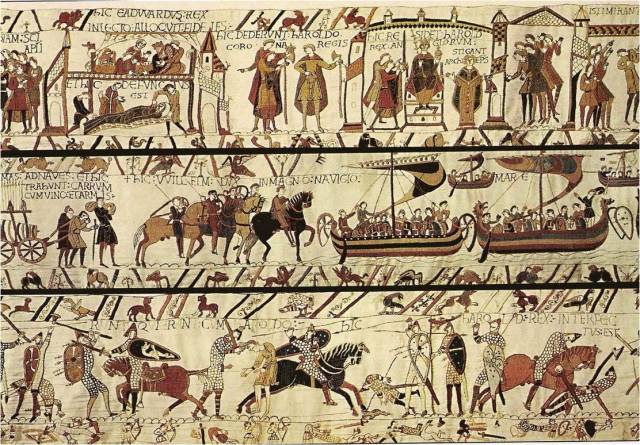
That is not the end of the tale, however, for scarcely had the dust of Stamford Bridge settled when news came of a landing of Norman troops under William of Normandy on the south coast. Harold ordered Morcar and Edwin to gather new levies, while he sped south once more with his exhausted troops. Perhaps unwisely, Harold chose to meet William in battle before the fresh northern troops could arrive. On 14 October, 1066, he met William’s army at Hastings, and there Harold in turn was killed, and the Saxons decisively beaten.

The repercussions of Fulford were enormous. The losses suffered by the Mercian and Northumbrian levies at Fulford meant that the army led by Harold into battle at Hastings was desperately undermanned. It is not a stretch of imagination to claim that the Battle of Fulford led directly to the success of the Norman invasion that followed.
tapiz-bayeux

Hiram and Sally Cawood

Hiram and Sally Cawood

DEATH CLAIMS PROMINENT MAN
Hiram Cawood Dies At Cawood This Morning
FUNERAL SUNDAY
–Hiram Cawood, well-known and respected citizen of Harlan County, died this morning at 7:20 o’clock at his home near Cawood, at the age of 74 years.
–Funeral services will be held Sunday afternoon at 2 o’clock from the Cawood home at Cawood, with the Rev. C. E. Vogel, pastor of the Harlan Methodist Church, and Rev. B. C. Stewart, Presbyterian Minister, officiating.
–Active pall-bearers will be G. W. Middleton, Bill Cloud, J. F. Middleton, Pope Cawood, J. B. Carter, M. R. Howard, Byrd Hensley, Dan Fields, Henry Skidmore and F. F. Cawood.
–Mr. Cawood suffered a paralytic stoke Monday morning at 6:30, while at a corn crib on his farm. He did not regain consciousness. Members of his family were at his bedside this morning when death occurred.
–In Mr. Cawood’s death, Harlan County loses in its citizenship a man who held the respect of people in all walks of life. He was held in esteem as a public official, a business man, a Christian and a friend. He attracted friendship thru his jovial demeanor and he was as well known as a man who maintained a character above reproach. Mr. Cawood was one of the grand old men of Harlan County, and in his 74 years he became loved by thousands of people.
–Mr. Cawood would have been 74 years of age Monday, February 12. He was born in 1860, at Cawood, the son of John Cawood and Louisiana Jones. To his first marriage was born one child, Green Cawood. In 1880, Mr. Cawood was married to Sally Brittain, daughter of Carlo Brittain, and Sally Hamblin, to which union was born nine sons and two daughters all of whom are living.
–Mr. Cawood became a merchant at Evarts in 1890, where he successfully conducted a country store. In 1896, he was appointed Deputy United States Marshal for Eastern Kentucky, and held that position for several years. He was known to have been an honest and upright public official, and won the respect of the people.
–He became a member of the Harlan County Board of Education in 19?? at which time the Board was appointed. He was the first board member elected by the people in November 1920, and he served as an elected member until January 1, 1934. He did not seek re-election at the expiration of his last term.
–Hiram Cawood is survived by the following children: Green Cawood, John Cawood, Carlo B. Cawood, Dr. W. P. Cawood, Bob Cawood, Chad Cawood, Jim Cawood, Mrs. E. V. Pope, Joe Cawood, Bruce Cawood, Mrs. Wash Ledford and Oscar Cawood.
–He is survived by 34 grandchildren: Ethel, Herbert, Jim and Daisy, sons and daughters of John Cawood; Eugene and Edward sons of Carlo B. Cawood.
–Virginia, Gertrude and Bob, daughters and son of Bob Cawood; Hiram Nelson, Milburn, Wilburn, Clarence and Helen sons and daughter of Chad Cawood; Walter Lee, Don Billy Joe and Fern sons and daughter of Jim Cawood.
–Lee Rose, Hiram, Nannie, Fred and James Williard sons and daughter of Joanna Cawood Pope; Pauline, Evelyn and Jacqueline, daughters of Joe Cawood; Bruce, Jr., Sally and Bill, sons and daughter of Bruce Cawood; Cawood and Eloise, son and daughter of Sudie Cawood Ledford.
–Two great-grandchildren survive. They are the daughter of Hiram Pope and Jack Earl Cawood, the son of Bill Cawood.

Mrs. Sally Cawood Dies At Hospital
Funeral services for Mrs. Sally Brittain Cawood, 84, a member of one of Harlan County’s oldest and most prominent families, will be conducted at 2 pm tomorrow at the family home in Cawood with Dr. S. C. Rice, pastor of Harlan Methodist Church, and the Rev. R. C. Helton, pastor of the High Splint Baptist Church, officiating. Burial will be in the Cawood Cemetery. Mrs. Cawood died at Harlan Hospital at 7 pm Sunday following a long illness. She was admitted at the hospital in April and last week her condition became critical following a heart attack. Husband Died In 1934. A widow of the late Hiram Cawood, who died in 1934, she is survived by the following children: Dr. W. P. Cawood, C. B. Cawood, Deputy Sheriff Bruce Cawood, all of Harlan; Dr. Oscar Cawood, of High Splint: Mrs. Ewell Pope, Mrs. Wash Ledford, Chat Cawood, Sheriff James S. Cawood, Bob Cawood, all of Cawood. Thirty-one grandchildren and 21 great-grandchildren also survive her death along with two sisters, Mrs. Louisa Jones and Mrs. M. R. Howard, both of Harlan. Grandsons As Pallbearers – Mrs. Cawood’s grandsons will serve as pallbearers. They are Bill Cawood, Eugene Cawood, Hiram Pope, James Willard Pope, Bob Cawood, Jr., Hiram Nelson Cawood, Billy Joe Cawood, Joe Cawood, H. C. Cawood, Cawood Ledford, Bruce Cawood, Jr., James A. Cawood, Dr. Walter L. Cawood and Ed Cawood. Lifelong Resident – Mrs. Cawood, born July 27, 1864, was the daughter of the late Carlo Brittain and Sally Hamblin Brittain, and she had made her home at Cawood throughout her lifetime. She was a member of the Presbyterian Church at Cawood.

Family links:
Spouse:
Hiram Cawood (1860 – 1934)*

Children:
John Cawood (1881 – 1962)*
Carlo Brittain Cawood (1882 – 1973)*
William Proctor Cawood (1883 – 1964)*
Robert Lee Cawood (1885 – 1964)*
Nancy Louisa Cawood (1887 – 1888)*
Joanna Cawood Pope (1889 – 1972)*
George Chadwell Cawood (1892 – 1986)*
James Stephen Cawood (1896 – 1976)*
Joe Wheeler Cawood (1898 – 1934)*
Walter Bruce Cawood (1901 – 1964)*
Susan L Cawood Ledford (1903 – 1986)*
Oscar Lewis Cawood (1906 – 1968)*

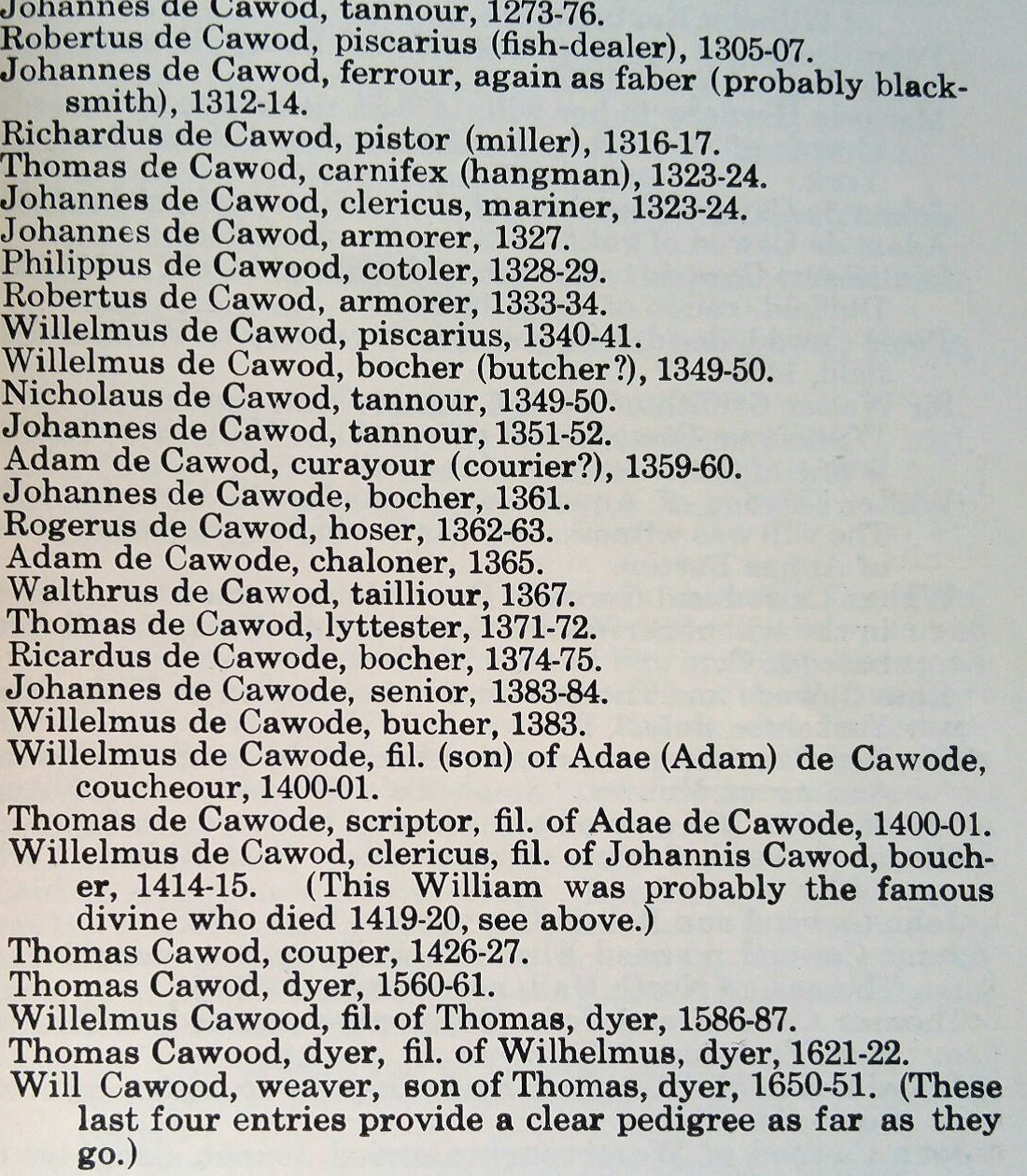
Thomas De Cawood, Carnifex, (Hangman)

In Olde England most people had to name their occupation to own property and in census’ at the times between 1200 amd 1400 AD .Richardus De Cawood as a pistor or Miller while it seems Thomas De Cawood was listed as a Carnifex or a hangman, this one has left me wondering who he hanged and if it was anyone famous, I searched but found nothing,, and will always be a mystery, I suppose, lost in the fog of time. It has however given me an Idea for a story that I will write at a future time.

Many executioners were professional specialists who traveled a circuit or region performing their duty, because executions would rarely be very numerous. Within this region, a resident executioner would also administer non lethal torture or punishment.

It was a family business often with an actual executioner having a few assistants.
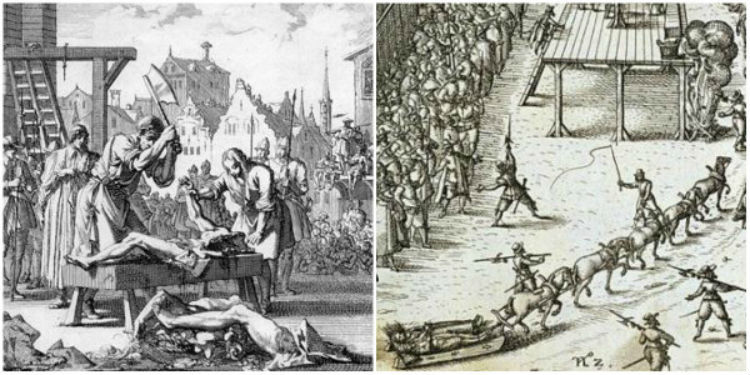
It needs to note that beheadings in Western Europe of the Middle Ages were a privilege provided to nobility and bold criminals usually as petty criminals were executed by hanging, and heretics were burnt being tied to stake. There were also special kinds of execution requiring special skills. Those found guilty of high treason in mediaeval England as early as in the 13th century were sentenced to death by hanging, drawing and quartering. A person condemned was fastened to a hurdle and dragged out by horse to a public place where he was hanged by the neck almost to the point of death. He was placed on a table while still alive, disembowelled and emasculated, i.e. had his interstines, penis and testicles cut off. These were thrown into a fire nearby to let him watch if still conscious. He was beheaded, his heart pulled and also thrown into a fire with the rest of his body quartered, i.e. separated by axe into four parts, and put on display in public places. Women found guilty of high treason were burnt at the stake instead. This practice continued in England until terminated officially in 1870, though the last person executed this way was David Tyrie in 1782.

Those condemned to beheading or hanging, drawing and quartering often paid their executioners or gave them any pocket money available in order for them to remain sober and do their job fast as unprofessional execution was quite painful.

The situation with hangmen could be different in other parts of the world. In the Ottoman Empire, executioners and gravediggers were gypsies and the Turks considered them damned people. There were even separate graveyards for them.

Finally, an old joke which is true to some extent as any good joke. Charles-Henri Sanson, a French master executioner who carried out sentences on 2918 people including Louis XVI, Robespierre and Danton, was asked by Napoleon Bonaparte how he can sleep well having so much blood on his hands. The answer was: “If emperors, kings and dictators can sleep well, why shouldn’t an executioner?”

A Carnifex did more than just hang people they were also punishers, who would torture ,burn, or disembowel the guilty. They have often been portrayed as wearing a black hood or mask but very few did, they were usually like movie stars and revered for their work.

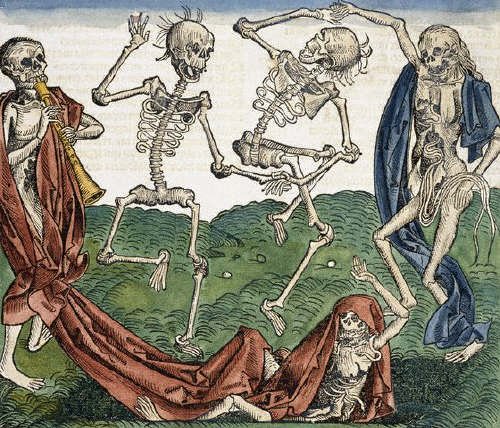
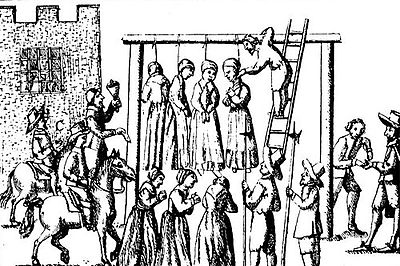
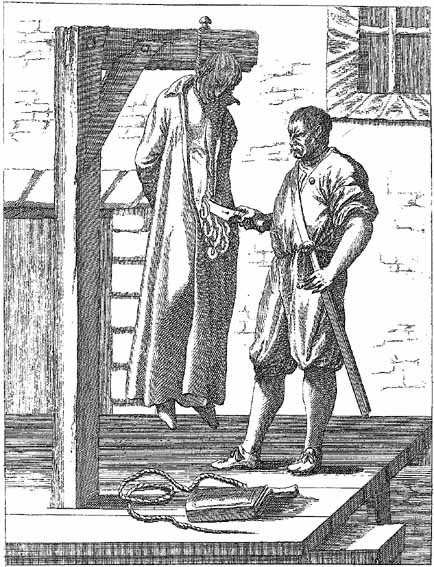
A_Dance_of_Death_1493 hanged -Witches_Being_Hanged Hanged,_drawn_and_quartered hanging eng hangman enea

job titles

Thanksgiving at Cawood Castle

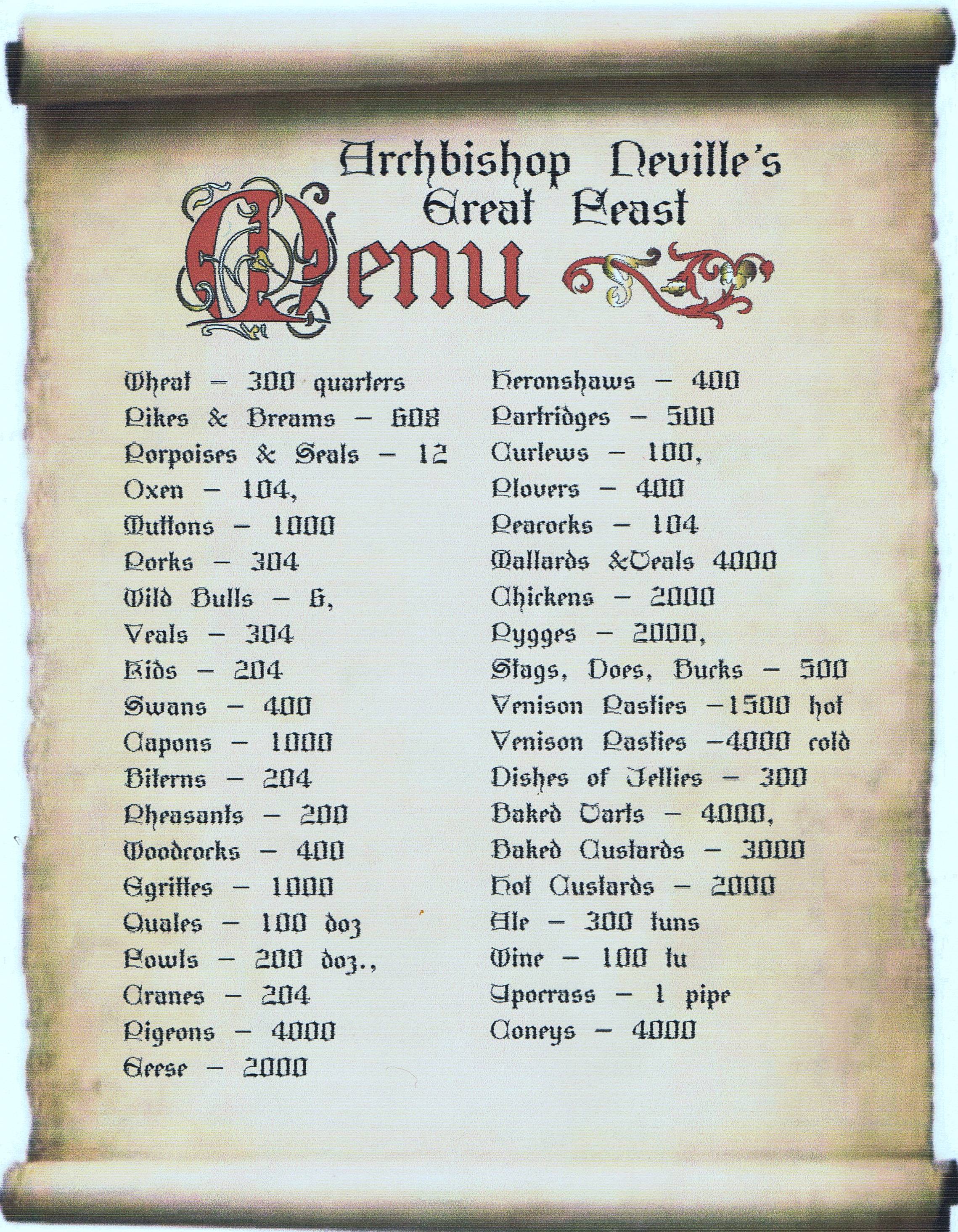
Great-feast-list a

Thanksgiving Overload? Try This For A Feast Posted by Eric Hopton in An English Angle, Seasonal

Nov 27, 13Thanksgiving Overload? Try This For A Feast Any excuse will do. We all love a blowout don’t we? At Thanksgiving or Christmas the traditional turkey is the belly-busting bird of choice for many families. And let’s face it, a turkey is a big bird even when de-feathered, gutted, stuffed and roasted. Sometimes we just have to just stretch those stomach muscles from the inside. But if you think your annual Thanksgiving fare is ever so slightly over-indulgent, you might feel a little better when I tell you about a rather more elaborate feast that took place just down the road from where I live in Yorkshire, England, a few years ago; well, 548 years ago to be precise.

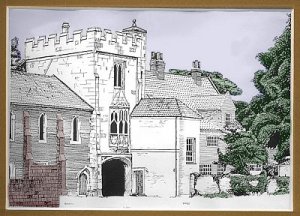
The year was 1465. A certain George Neville had been appointed Archbishop of York the year before and had taken up residence in Cawood Castle, which was the traditional residence of that esteemed office. Neville was no monastic recluse. It seems that, for a “man of the cloth,” he liked to party. Neville wanted to celebrate his appointment in style with the aim of up-staging the English Monarchy’s Coronation celebrations. What followed was to become known as the Great Feast of Cawood.

Nobody knows for sure how long the feast lasted, but it was probably more than a week. There are, as always, various accounts, but what follows is an idea of the scale of what was on offer.

Let’s start with the feathered food. There were 400 Swans, 1,000 Capons, 204 Bitterns, 200 Pheasants, 400 Woodcocks, 1,000 Egrets, 1,200 Quails, 2,400 Fowles, 204 Cranes, 4,000 Pigeons, 2,000 Geese, 400 Herons, 500 Partridges, 100 Curlews, 400 Plovers, 104 Peacocks, 4,000 Mallards and Teals, and 2,000 Chickens.

If red meat is more to your taste you could have taken your fill from 104 Oxen, 1,000 Sheep, 2,304 “Porks and Pigges,” six Wild Bulls, 304 “Veals,” 204 Goats, 4,000 Rabbits, and finally — if you are partial to a bit of venison — there were 500 “Stags, Does, and Bucks.”

Pie lovers could definitely go supersize on Venison Pasties with 1,500 hot and 4,000 cold ones to choose from.

Fish freaks were catered for with 608 Pikes and Breams along with 12 Porpoises and Seals.

Got a sweet tooth? You could finish off with 300 “Dishes of Jellies,” 4,000 Baked Tarts, 3,000 Baked Custards, or 2,000 Hot Custards.

I know what you are thinking; all this gluttony is thirsty work. What about the booze? Well, there were 100 Tuns of Wine and 300 Tuns of Ale. A Tun was around 252 US gallons!

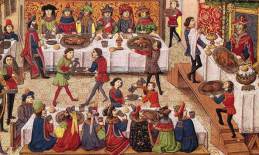
The guest list ran to around 2,500 and included 59 Knights, 28 Peers, ten Abbots, seven Bishops, as well as lawyers, clergy, squires, and “ladies.” It required a thousand cooks and the same number of “kitcheners and scullions” to prepare all that food. Over a thousand servants waited at tables.

The Archbishop must indeed have felt like Royalty, but sadly for him meddling in the affairs of Kings cost him dearly. He switched allegiances between Edward IV and Henry VI once too often and was arrested twice and charged with treason. He was held in the Tower of London on one occasion, stripped of his office, and died in 1476 a broken man.

Not much remains of the original Cawood Castle but the magnificent Gatehouse still stands and every time I drive past it I think of that incredible Feast. Let’s all toast old George this Thanksgiving
http://blogs.redorbit.com/thanksgiving-overload-try-this-for-a-feast/
http://archive.is/P1Dmu
http://www.christianforumsite.com/threads/creation-theory-causes-birth-of-a-ring.34387/
the-yorkshire-journal-winter-2014_the-great-feast-of-cawood

Stephen Cawood II Immigrates from Troubled London 1666

It seems Stephen Cawood I trouble started with King charles the I and

his religious policies regarding Presbyterians , Catholics ,Anglicans,

Protestants and others. This is all pretty complicated so I will try to make

this much simpler by saying King Charles tried to bring England under one

religion which did not work out very well, he was an Anglican married to a

French catholic whom he allowed to practice her religion openly. He

insisted on conformity among all religions in all three kingdoms of Great

Britain. He tried to force the Scottish church to use the Anglican and

laudian Prayer Book and started what is called the bishops wars. To

finance this he was forced to recall Parliament in 1640 bringing his 11 year

private rule to an end. At first it was called the Short Parliament then

reformed into the Long Parliament. Practically everyone in the Parliament

were opposed to King Charles’s religious policies .John Pym in the House

of Commons and a small group of Puritan nobles blamed Archbishop Laud

and the Earl of Strafford with great success, they were impeached and

condemned to death with no interference from Charles.
In 1641 The Irish Rebelled and there was then a great argument over who

would control the Army sent to quell the uprising, Parliament or the king.

King Charles tried to have his top 5 opponents in Parliament arrested but

this backfired on him and actually started the English Civil War between the

Parliamentarians and the royalists loyal to the king .There is much more to

the English Civil War than we will go into here and get back to the Cawood

Family. Stephen Cawood I was a supporter of the Parliamentary Party and to the Anglican

Church.He was a “round head “, a Puritan who wore his hair short contrary to those who wore wigs of long hair.  Stephen Cawood’s son Stephen was on the royalist side who lost,

and was apparently disinherited of the family fortune, when

Stephen the I st died he left everything to a trust .In his will dated January ,9, !653 he left his property in East Harwick, Aackworth, Pontifract, Hemsworth

and Kinsley to 6 Trustees to sell the land and use the money to build a

chapel and a free school in East Hardwick, while the money from the rest

of his Estate was to be used to pay and maintain a schoolmaster and

preaching minister to the relief of the poor. He then died forty days after the

execution of his will . He left nothing to his sons because of their rebellions

choices and lifestyles he did not approve of.
For the next few years Stephen the II was most likely in the Army then

started a small tavern business in London until the Plague came.
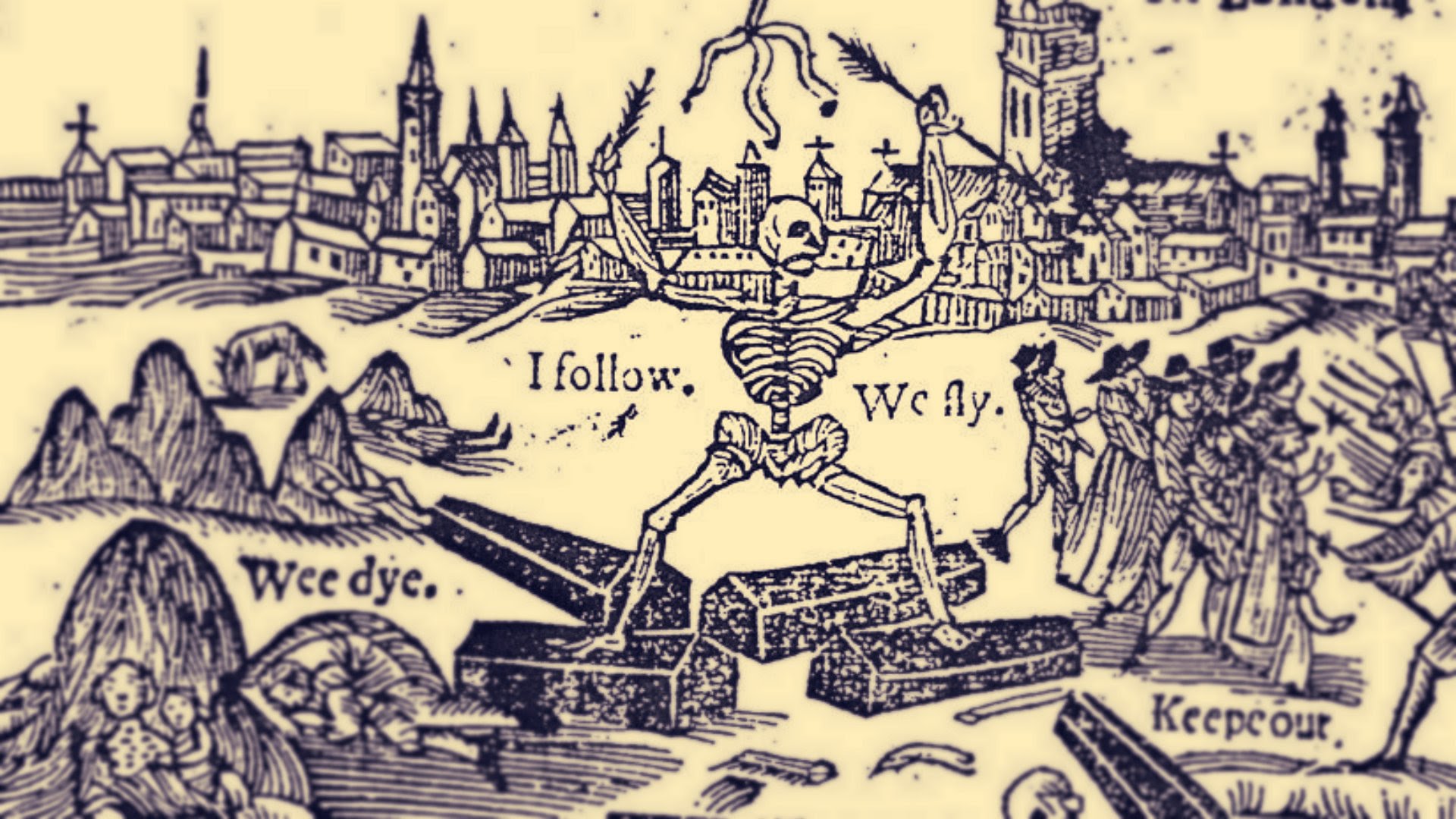
1665 London was a filthy place to live, people threw their trash right out

into the streets that were alive with rats. also it was a very hot long summer

that year and the Plague was able to spread. this was a popular poem of the

time,
“Ring-a-ring of roses,
A pocketful of posies,
Attischo, Attischo,
We all fall down.”
Most wealthy peole left London and a militia was hired to keep those

with the Plague in the city. Any family suspected of having the Plague was

locked in their house for 40 days, a red cross was painted on the door.

searchers were hired to find dead bodied of Plague victims, they would

haul a cart and yell “Bring out yer Dead” through the streets, they were then

hauled to a mass grave and diposed of. Unqualified people known as

Plague doctors and Plague nurses were paid to visit the sick and bring food

which mostly they sold or stole from the people, most real doctors and

nurses had left town. A man named Nathaniel hodges believed it could be

sweated out of a person and encouraged those with it to create heat by

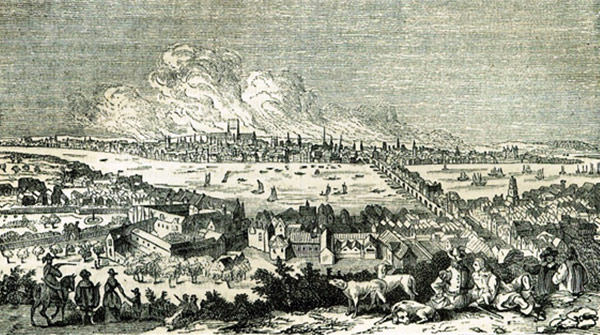
burning things and creating a lot of smoke to get rid of it. The Plague raged on throughout that year and intoplague an fire 1665 londonplague 1665 the end of 1666.

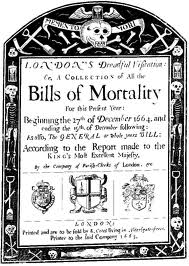
London required each parish to submit a bill of mortality each week, a

common sight was a red cross on the door with these words written on it

“Lord have mercy on us”.
Stephen cawood II left England as an Indentured servant to pay his

passage to Maryland in 1666 a couple of months before the Great Fire of

london in september 1666 which is credited with stopping the Plague of

London.
plague bill of mortality

Sister Cawood

In the 1600’s The Cawoods Immigrated to different parts of the Brittish Empire, Australia, America, South Africa and India.

Cawood, Dorothy Gwendoline…Sister Dorothy Cawood – Marilyn (soprano)
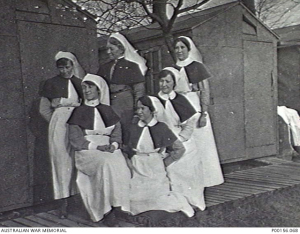
The Kyarra and nurses

Dorothy Cawood (1884 – 1962) undertook her nursing training between 1909—1913 at the isolated Coast Hospital at La Perouse, famous for turning out ‘tough’ nurses.

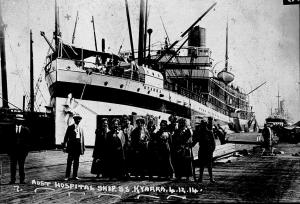
Dorothy enlisted in the Australian Imperial Force on 14 November 1914 as a staff nurse in the Army Nursing Service, and embarked on HMAT Kyarra 28 November 1914 with the second convoy from Australasia. She arrived Egypt, and was based at the 2nd Australian General Hospital (2AGH) at Mena and Ghezireh, on the outskirts of Cairo, where she served during the Gallipoli campaign. In December 1915 she was promoted to Sister.

Following the wind-down of the Gallipoli campaign, Sister Cawood embarked for France with the 2AGH and served at Marseilles and Wimereux, near Boulogne. She was also briefly attached to the 8th Stationary Hospital and the Australian Voluntary Hospital before returning to 2AGH in July 1916.
Nurses at Trois Arbres (2nd ACCS)

Nurses at Trois Arbres (2nd ACCS)

By December 1916 Sister Cawood’s nursing duties brought her closer to the front and into more immediate danger. Nursing at the 2nd Australian Casualty Clearing Station at Trois Arbres near Armentières during July 1917, Sister Cawood along with Sisters Clare Deacon, Alice Ross-King and Staff Nurse Derrer, risked their lives to rescue patients trapped in burning buildings after a German air raid. In September the four became the first members of the Australian Army Nursing Service to be awarded Military Medals, the highest military honour then granted to a woman. Dorothy later wrote to her parents: ‘Do not blame me for this. It is Fritz’s fault. He will do these dastardly tricks’.

(Sister Cawood received her medal in a ceremony at Buckingham Palace on February 13th, 1919.)

On 1 August Sister Cawood was transferred to the 38th Stationary Hospital at Calais and, in November, to the 6th Australian General Hospital. While serving there she was mentioned in dispatches for ‘distinguished and gallant service in the field’. Not long afterwards Sister Cawood was transferred to the Genoa, Italy, with the 38th Stationary Hospital. She was hospitalised with tonsillitis for a few months in 1918, but served in Genoa until January 1919. She was then transferred to Australian Auxiliary Hospitals in England until her repatriation in May, 1919.

Sister Cawood returned to Sydney after more than four years overseas. After being demobilised she worked in the State Hospital at Liverpool, New South Wales, before becoming matron of the David Berry Hospital in Berry. She retired in 1943 and the following year returned to Parramatta where she lived until her death in 1962. She had never married and was buried in Sydney’s Rookwood cemetery.

I have the vaguest childhood memory of a small lady, rather severe in aspect to a small child. My uncle remembers her as being very softly spoken.

The interest in this story lies in its window on the WWI nursing service. This award of the Military Medal to Australian nurses was not controversial at the time, but is now. Our nurses officially held officer status. The Military Medal was for soldiers, not officers. Officers (including other non-combatants) were awarded the Military Cross for gallantry in action. There were only seven Military Medals awarded to Australian nurses. Historians say that there is no doubt that the award of those Military Medals to that very select group of nurses was an act of discrimination; they should all have been Military Crosses.
Royal Red Cross

Royal Red Cross

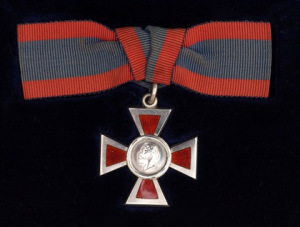
Sister Cawood was also awarded the ARRC—Royal Red Cross, a highly esteemed award for military nursing. Only about 7,000 ARRCs have been awarded throughout the British Empire and British Commonwealth from its institution in 1883 to the present day. The corresponding figure for the Victoria Cross is about 1,000. It is interesting to note that this year is also the Centenary of the Australian Red Cross.

Marilyn

Sister Cawood’s war service is commemorated at Parramatta and District Great War Roll of Honour, and at St Johns Anglican Cathedral Parramatta – Memorial Arch

More information about the events of 22 July 1917

Excerpt of diary entry by Sister Alice Ross-King http://throughtheselines.com.au/research/alice-ross-king

Australian War Memorial entry for Sister Dorothy Cawood http://www.awm.gov.au/people/P10676555/sister cawoods medal sister cawoods ship sister dorothy cawood

A Murder and a Ghost at Cawood Castle

Cawood Castle, Cawood, England
Easter Tuesday 1690
William Barwick murdered his pregnant wife and hid her body in a nearby pond. The following day Easter Tuesday, 1690 a witness saw the ghost of Mrs Barwick pointing to the pond that concealed her corpse. He reported what he had seen to the authorities, and William was arrested soon afterwards. The ghost of his wife still haunts the castle

Cawood Castle was a palace of the Archbishop of York probably built upon an early Saxon fortification dating from the reign of King Athelstan (Æthelstan) 925AD – 939AD. During the English Civil War (1642–1651) Cawood was fought over several times and served as a prisoner of war camp. Following the war it was all but destroyed and all that remains now is the gatehouse and banqueting hall. Four decades after the castles abandonment, a murder took place within its grounds and the killer was apparently caught with the aid of his victims ghost.

The story of this murder has appeared in several publications, but the following account comes from one of the earliest, Arthur L Hayward’s ‘Lives of

the most remarkable criminals: Who have been Condemned and Executed for Murder, the Highway, Housebreaking, Street Robberies, Coining or

other offences’ (1735).

‘Murder was committed by William Barwick, upon the body of Mary Barwick his wife, at the same time big with child. What were the motives that

induced the man to do this horrid fact does not appear by the examination of the evidence, or the confession of the party; only it appeared upon his

trial that he had got her with child before he married her, that being then constrained to marry her, he grew weary of her, which was the reason he was

so willing to be rid of her, though he ventured body and soul to accomplish his design.

The murder was committed on Palm Monday, being then the fourteenth of April, about two o’clock in the afternoon, at which time the said Barwick

drilled his wife along until he came to a certain close, within sight of Cawood Castle, where he found the conveniency of a pond. He threw her by

force into the water, and when she was drowned and drawn forth again by himself upon the bank of the pond, he had the cruelty to behold the motion

of the infant, yet warm in her womb. This done, he concealed the body, as it may readily be supposed, among the bushes that usually encompass a

pond, and the next night when it grew dusk, fetching a hay spade from a rick that stood in the close, he made a hole by the side of the pond, and

there slightly buried the woman in her clothes.

Having thus despatched two at once, and thinking himself secure, because unseen, he went the same day to his brother-in-law, one Thomas Lofthouse

of Rusforth, within three miles of York, who had married his drowned wife’s sister, and told him he had carried his wife to one Richard Harrison’s

house in Selby, who was his uncle, and would take care of her.

But Heaven would not be so deluded, but raised up the ghost of the murdered woman to make the discovery. It was Easter Tuesday following, about

two-o’clock in the afternoon, that the afore-mentioned Lofthouse, having occasion to water a quickset hedge not far from his house, as he was going

for the second pailful, an apparition went before him in the shape of a woman, and soon after set down against a rising green grass plot, right over

against the pond. He walked by her as he went to the pond, and as he returned with the pail from the pond, looking sideways to see whether she

continued in the same place, he found she did, and that she seemed to dandle something in her lap that looked like a white bag, as he thought, which

he did not observe before. So soon as he had emptied his pail, he went into his yard and stood still to turn whether he could see her again, but she

was vanished. In this information he says that the woman seemed to be habited in a brown-coloured petticoat, waistcoat and a white hood, such a one

as his wife’s sister usually wore, and that her countenance looked extremely pale and wan, with her teeth in sight, but no gums appearing, and that her

physiognomy was like that of his wife’s sister, who was wife to William Barwick.

But notwithstanding the ghastliness of the apparition, it seems it made so little impression on Lofthouse’s mind that he thought no more of it, neither

did he speak to anybody concerning it until the same night, as he was at family duty of prayers, when that apparition returned again to his thoughts,

and discomposed his devotion; so that after he had made an end of his prayers, he told the whole story of what he had seen to his wife, who laying

circumstances together, immediately inferred that her sister was either drowned or otherwise murdered, and desired her husband to look after her the

next day, which was the Wednesday in Easter week.

Upon this, Lofthouse, recollecting what Barwick had told him of his carrying his wife to his uncle at Selby, repaired to Harrison before-mentioned,

but found all that Barwick had said to be false, for Harrison had neither heard of Barwick nor his wife, neither did he know anything of them. Which

notable circumstance, together with that other of the apparition, increased his suspicion to that degree that now concluding his wife’s sister was

murdered, he went to the Lord Mayor of York. And having obtained his warrant, he got Barwick apprehended; who was no sooner brought before the

Lord Mayor, but his own conscience then accusing him, he acknowledged the whole matter, as it has been already related, and as it appears by the

examination and confession herewith printed.

On Wednesday, the 16th of September, 1690, the criminal, William Barwick, was brought to his trial before the Honourable Sir John Powel, Knight,

one of the judges of the Northern Circuit, at the assizes held at York, where the prisoner pleaded not guilty to his indictment. But upon the evidence of

Thomas Lofthouse and his wife, and a third person, that the woman was found buried in her clothes, close by the pond side, agreeable to the

prisoner’s confession, and that she had several bruises on her head, occasioned by the blows the murderer had given her to keep her under water, and

upon reading the prisoner’s confession before the Lord Mayor of York, attested by the clerk who wrote the confession, and who swore the prisoner’s

owning and signing it for truth, he was found guilty and sentenced to death, and afterwards ordered to be hanged in chains.

All the defence that the prisoner made was only this, that he was threatened into the confession that he had made, and was in such a consternation that

he did not know what he said or did; but then it was sworn to by two witnesses that there was no such thing as any threatening made use of, but that

he made a free and voluntary confession, only with this addition at first, that he told the Lord Mayor he had sold his wife for five shillings, but not

being able to name either the person or the place, where she might be produced, that was looked upon as too frivolous to outweigh circumstances

that were too apparent.

The Examination of William Barwick, taken the 25th of April, 1690

Who sayeth and confesseth that he carried his wife over a certain wainbridge, called Bishop Dyke Bridge, between Cawood and Sherburn; and within

a lane about one hundred yards from the said bridge, and on the left hand of the said bridge, he and his wife went over a stile, on the left hand of a

certain gate, entering into a certain close, on the left hand of the said lane; and in a pond in the said close, adjoining to a quick-wood hedge, he did

drown his wife and upon a bank of the said pond did bury her, and further, that he was within sight of Cawood Castle, on the left hand, and there was

but one hedge betwixt the said close where he drowned his wife, and the Bishops Slates, belonging to the said castle.

William Barwick
Exam, capt. did etc.
anno super dict.
coram me.

S. Dawson, Mayor

England North Yorkshire Yorkshire Apparitions Cawood Hauntings
Re: Cawood Castle

According to ‘The Haunted Homes and Family Traditions of Great Britain’ by John Ingram (1897)

Anyone conversant with the less-known judicial records of the past, is well aware that supernatural evidence frequently formed an important factor in

ancient criminal trials. One of these curious cases is recorded in Aubrey’s Miscellanies, that medley of useful and useless matters, as having taken

place in the immediate vicinity of Cawood Castle, Yorkshire. The depositions made at the trial, but for one extraordinary and all-important piece of

evidence, were of common-place type. According to the circumstances brought out in the
course of investigation, the facts were these:

On Monday, the 14th of April, 1690, William Barwick was out walking with his wife, Mary Barwick, close to Cawood Castle. From motives not

divulged at the trial, although shrewdly guessed at by Aubrey, he determined to murder her, and finding a pond conveniently at hand, he threw her in.

Deeming, doubtless, that the body would soon be discovered where it was, he went the next day to the place, procured a huge spade, and, getting the

corpse out of the water, made a grave close by, and buried it.

Apparently satisfied that no one had witnessed his ghastly deed, Barwick actually went on the day he had committed the murder to his wife’s sister,

and informed her husband, Thomas Lofthouse, that he had taken his wife to a relative’s house in Selbv, and left her there. Lofthouse, however,

according to his deposition on oath, averred that on the Tuesday after the visit of Barwick, “about half an hour after twelve of the clock, in the day-

time, he was watering quickwood, and as he was going for the second pail, there appeared, walking: before him, an apparition in the shape of a

woman. Soon after she sat down over against the pond, on a green hill. He walked by her as he went to the pond, and as he came with the pail of

water from the pond, looking sideways to see if she sat in the same place, which he saw she did.” The witness then observed that the apparition was

dandling “something like a white bag” on her lap, evidently suggestive, indeed, of her unborn babe that was slain with her. Lofthouse now emptied his

pail of water, so he averred, and then stood in the yard of his house, to see if he could still see the woman’s figure, but she had disappeared. He

described her attire as exactly similar to that worn by his sister-in-law at the time of her murder, but remarked that she looked extremely pale, and that

her teeth were visible, “her visage being like his wife’s sister.”

Notwithstanding the horror of this apparition, Lofthouse, according to Aubrey’s account, did not mention anything about it to his wife till night-time,

when, at his family duty of prayers, the thoughts of the apparition were so overpowering, that they interrupted his
devotion. After he had made an end of his prayers, therefore, he told the whole story of what he had seen to his wife, “who, laying the whole

circumstances together, immediately inferred that her sister was either drowned or otherwise murdered, and desired her husband to look after her the

next day, which was Wednesday in Easter week.” Lofthouse now recalled to mind what Barwick had told him about having left his wife at his uncle’s

at Selby, and therefore went to him and made inquiries, and found that neither the man nor his wife had been seen or heard of there. This information,

coupled with the appearance of the apparition, increased his suspicions against Barwick to such a degree, that he went before the Lord Mayor of

York, and obtained a warrant for the arrest of his brother-in-law.

The culprit, when arrested, confessed the crime, and the body of the murdered woman being disinterred, was found dressed in clothing similar,

apparently, to that worn by the apparition. Ultimately Barwick suffered the extreme penalty of the law for his crime.

http://www.mysteriousbritain.co.uk/england/north-yorkshire/hauntings/cawood-castle.html

The Cawood Bible

Crown Publisher and Printer to Queen Mary and Queen Elizabethcawood bible

John Cawood

In the latter years of the 15th century, some male members of the Cawood family left Yorkshire for London. John Cawood (grandson of John

Cawood & Agnes Fairfax, direct descend and of Johannes de Cawood)became famous as the Queen’s Printer in the 16th century during the reigns of

Queen Mary I and her half sister, Queen Elizabeth I. He was an original member of the Stationers’ Company, appointed upper warden on May 4th

1556, he was chosen Master in 1561, 1562, and in 1566. Apatent was granted him by Queen Mary, this patent constituded him asRoyal Printer and

crown Publisher. It seems he published all the proclomations of Queen Mary and Queen Elizabeth. The Queen Elizabeth Bible (sometimes called

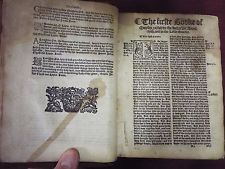
Cawood Bible) was printed by John Cawood,Royal Printer, there are only 3 original copies left. He printed five copies one New Testament and four

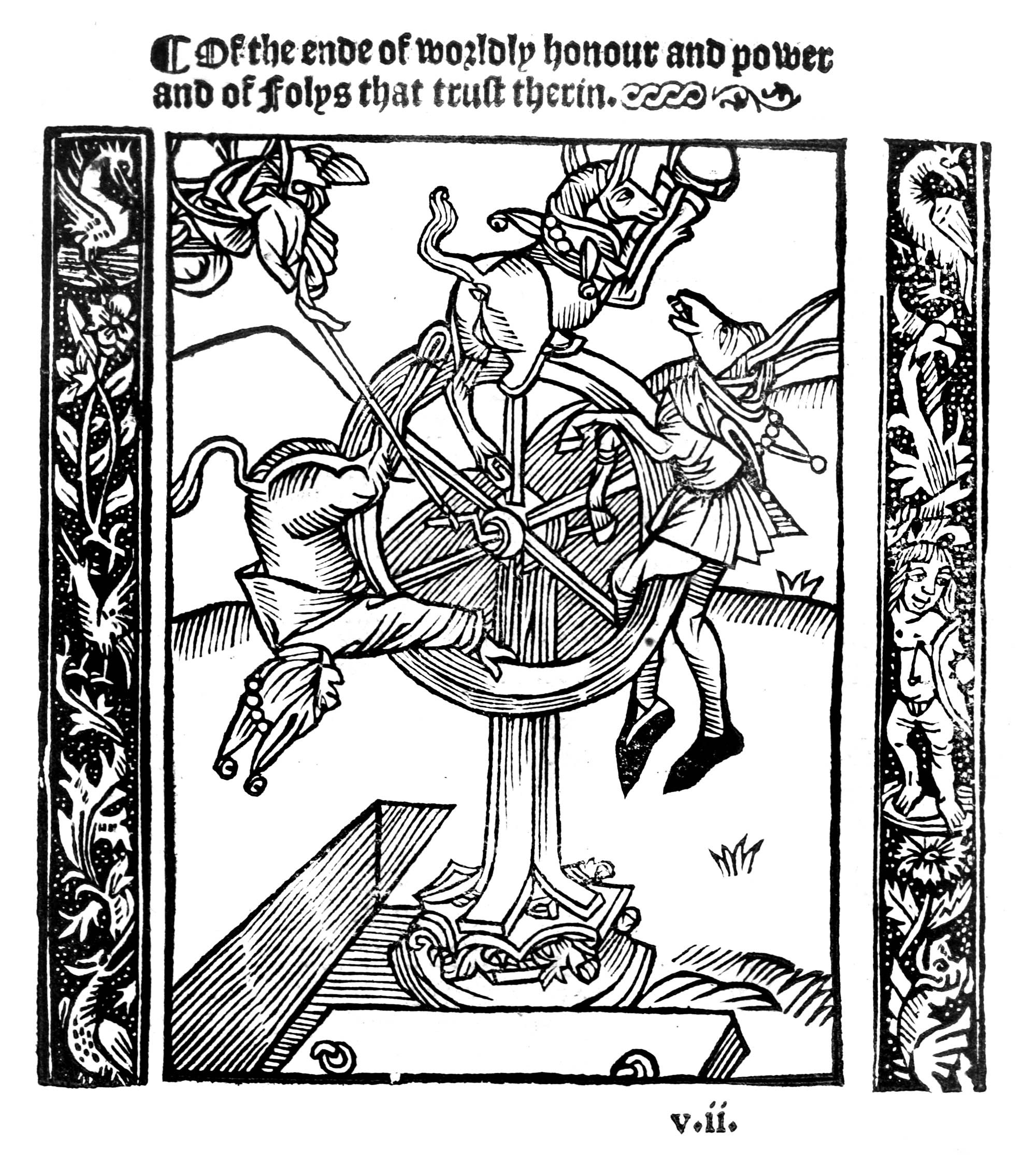
Bibles called the Great Bible Quarto by 1561, three still exist. He alsoprinted some other books which are very collectable and sell for big money. One

is called “Ship of Fools”

The Homilies: by Dr. Ian Lancashire

Copyright 1994 Ian Lancashire. ISBN 1-896016-00-6

Elizabeth, coming to the throne in early 1559, quickly perceived the homilies to be an important instrument in the settlement of religious conflict, a

precondition of political security. In April 1559 she restored them as official homilies of the Church of England in her 27th and 53rd injunctions to the

clergy and laity.

XXVII. Also, Because through lack of preachers in many places of the queen’s realms and dominions the people continue in ignorance and

blindness, all parsons, vicars, and curates shall read in their churches every Sunday one of the homilies, which are and shall be set forth for the same

purpose by the queen’s authority, in such sort, as they shall be appointed to do in the preface of the same.

LIII. Item, That all ministers and readers of public prayers,chapters, and homilies shall be charged to read leisurely, plainly,and distinctly; and also

such, as are but mean readers, shall peruseover before, once or twice the chapters, and homilies, to the intentthey may read to the better

understanding of the people, and the moreencouragement to godliness. (Cardwell 1844: I.223-24, 231)

With these instructions in mind, the queen’s printers R. Jugge and J.Cawood accordingly issued the first book of homilies in 1559, 1560,1562, and

1563.

From: Printing in England

John Cawood (1514-72) came of an old Yorkshire family of some substance and was apprenticed to John Reynes, who is best known as a book

binder and who died in 1543 or 1544. In 1553 Cawood replaced Richard Grafton as Royal Printer. For his official salary of £6. 13s.4d. per annum,

Cawood was directed to print all ‘statute books, acts,proclamations, injunctions, and other volumes and things, under what name or title soever’ in

English, with the profit appertaining. He was also granted the reversion of Reyner Wolfe’s patent, authorized in1547, for printing Latin, Greek and

Hebrew books, for which he was to receive an additional 16s. 8d. per annum ‘and all other profits and advantages thereto belonging.’ He never enjoyed

this reversion, for he died a year before Wolfe. In 1553 Cawood seems to have acquired a certain amount of printing material from Steven Mierdman,

who on the accession of Mary had been obliged to leave England. In that year a number of books printed by Cawood contain initials formerly used

by Mierdman. Upon the incorporation of the Stationers’ Company in 1557,Cawood was one of the Wardens and he became Master in 1561, 1562 and

1566. During his lifetime Cawood was a great benefactor of the Company, though unfortunately his gifts perished in the Great Fire. As Queen’s Printer

to Mary, Cawood was responsible for printing the proclamations and acts published during her reign, but on the accession of Elizabeth, the

proclamation to that effect was printed by Richard Jugge, who subsequently printed several others and was termed in a letter from the Privy Council

dated 20 December, 1558, ‘the Quenes majesties Prynter.’ On 25 January, 1559, Cawood’s name was conjoined with Jugge’s in the printing of An Acte

whereby certayne offences be made treason, and from that time they continued jointly to print the State papers. Cawood died in 1572, and had been

three times married. His device consisted of his mark and initials.

Page of Bible edited & printed by John Cawood
From: Tyndale-Erasmus 1550 English-Latin Diglot

Under the brief reign of King Edward VI (the successor to King Henry VIII), numerous editions of all English versions were put to press:

Coverdale’s, Matthew’s, the “Great” Bible, and Tyndale’s “foundation”version as well. This volume is the fourth edition of Tyndale’s New Testament;

the editor and publisher (according to the preface), is believed to have been John Cawood of London. Only his initials,”I.C.,” appear on the title page

and Preface. The intention of this superb diglot was to present Tyndale’s English text (given in “Black Letter” type) side by side with Erasmus’ Latin

translation of his Greek Testament (in Roman type), so that those who were familiar with Latin (the traditional language of the church) could then

ascertain the “verity” of Tyndale’s version – as if, some 14 years after Tyndale’s martyrdom, this was still an issue! After all, Tyndale’s version became

the foundation for all subsequent English translations,and 90% of it survives in the King James Version. Only three other examples of this diglot are

recorded in the United States: at the New York Public Library, at Harvard and at the Huntington Library. This octavo-size treasure is listed by Herbert

as #88.

Sources

Ancestry.com: Public Member Trees (Ancestry.com Operations Inc; Provo, UT, USA; 2006) Record for John Cawood & Record for Barbara

Cawood
Dugdale, William. The History of St. Paul’s Cathedral in London, From its Foundation (Edward Maynard, Northamptonshire, England, 1716) Page

127

“John Cawood, Citizen and Stationer of London, Printer to the most renowned Queen’s Majesty, Elizabeth; married three Wives, and had

Issue by Joane the first Wife onely, as followeth, three Sons, four Daughters; John his eldest Son being Bachelour of Law, and Fellow in New

Colledge in Oxenford, died 1570. Mary married to George Bischoppe, Stationer; Isabell married to Thomas Woodcock Stationer. Gabrael, his

second Son, bestowed this dutifull Remembrance of his deare Parents 1591. the Churchwarden. Susanna married to Robert Bullok. Barbara married

to Mark Norton. Edmund third Son died 1570. He (John Cawood) died 1. of Aprill 1572. he being of Age then 58.”

ship o fools john cawoodThis is from “The Ship of Fools”

Humpty Dumpty part of the Cawood Castle Legacy

Humpty Dumpty

Humpty Dumpty sat on a wall.
Humpty Dumpty had a great fall.
All the king’s horses and all the king’s men
Couldn’t put Humpty together again.

History:

That Humpty Dumpty is an egg is not really affirmed in the poem. In its primary printed form, in 1810, it is a puzzle, and exploits for misdirection the information that “humpty dumpty” was 18th-Century reduplicative jargon for a small, awkward being. While a awkward human being falling off a fence would not be irreperably injured, an egg would be. The rhyme is no longer posed as a puzzle, as the response is now so well recognized. Comparable riddles have been recorded by folklorists in additional languages, such as Boule Boule in French, or Thille Lille in Swedish; although none is as extensively recognized as Humpty Dumpty is in English. Humpty Dumpty is a personality in a Mother Goose rhyme, portrayed as an anthropomorphized egg.

In an additional hypothesis, Humpty Dumpty referred to King Richard III of England, the hunchbacked monarch, the “Wall” being either the name of his horse (called “White Surrey” in Shakespeare’s play), or a allusion to the faction who abandoned him. Throughout the battle of Bosworth Field, he fell off his mount and was supposed to have been “hacked into pieces”.

The tale of Cardinal Wolsey’s ruin is depicted in the children’s nursery rhyme of Humpty Dumpty. At length Cawood castle passed to Cardinal Wolsey, who let it descend into disrepair in the near the beginning part of his occupation (1514 – 1530), due to his house at the Court, attachment to temporal relationships and his disregard of his diocesan duties. King Henry VIII sent Wolsey back home in 1523 after he failed to get a divorce from the Pope – a enormous error on Wolsey’s part. Wolsey returned to the fortress and began to restore it to its previous splendor. Though, he was arrested for high treason in November, 1530 and ordered to London for trial. He left on 6 November, but took ill at Leicester and died in the Abbey there on 29 November.

According to an supplement taken from the East Anglia Tourist Board in England, Humpty Dumpty was a powerful cannon throughout the English Civil War. It was mounted on top of the St Mary’s at the Wall Church in Colchester protecting the metropolis against blockade in the summer of 1648. Even though Colchester was a Royalist stronghold, it beleaguered by the Roundheads for 11 weeks before at last falling. The church tower was hit by enemy gun fire and the top of the tower was blown off, sending “Humpty” plummeting to the ground. Logically all the King’s horses and all the King’s tried to repair “him” but in vain. Additional reports have Humpty Dumpty referring to a sniper nicknamed One-Eyed Thompson, who engaged the similar church tower.Humptydumpty

A Brief history of the English Civil War

The Cawoods and their relatives fought on both sides in this conflict and several lost their lives and some lost their possessions and holdings, this is a brief history of this conflict.

The English Civil War The English Civil War started in 1642 when Charles I raised his royal standard in Nottingham. The split between Charles and Parliament was such that neither side was willing to back down over the principles that they held and war was inevitable as a way in which all problems could be solved. The country split into those who supported the king and those who supported Parliament – the classic ingredients for a civil war. As with most wars during the C17th, the English Civil War was not a long continuous war. Armies lacked mobility and the time taken to collect the most basic of equipment meant that there were long periods of time when no fighting was taking place despite England being at war at the time. Theweather was also a major determining factor in whether armies could fight or not. Roads were no more than tracks and the winter could cut them up to make them beyond use. Therefore moving any armies around would be very difficult.

There were only three major battles in the English Civil War – Edge Hill (1642) Marston Moor (1644) and Naseby (1645). While it is difficult to give an exact breakdown of who supported who as there were regional variations, at a general level the nobility, landowners and Anglicans supported Charles I while those in the towns and cities supported Parliament. However, this is a generalisation and there were noblemen who supported Parliament and there were towns such as Newark that supported Charles. The first major battle of the English Civil War was at Edge Hill. While both sides claimed success, there was no decisive result from this battle. The following year, 1643, saw a series of smaller battles that were equally as indecisive in the sense that neither side dealt a fatal blow to the other. In 1643, Oliver Cromwell came more and more to the fore with his desire for a New Model Army. This new force was to have a decisive impact on the course of the English Civil War.

In 1644, Charles lost control of the north of England as a result of a major defeat at the Battle of Marston Moor. The combined armies of Parliament and the Scots heavily defeated the Royalists. In June 1645, Cromwell’s New Model Army inflicted a fatal blow to the king’s army at the Battle of Naseby. Charles did not recover from this defeat and his cause was lost. In 1646, Charles surrendered to the Scots rather than to Parliament. He hoped to take advantage of the fact that the Scottish and Parliamentary alliance was fragile and could collapse at any time. In fact, the Scots took advantage of Charles and sold him to Parliament for £400,000 in January 1647. The problem Parliament now had was what to do with Charles. The king actually helped in his own downfall. In November 1647, he escaped to Carisbrooke Castle on the Isle of Wight and in 1648 the short-lived second civil war broke out. The supporters of the king were defeated at Preston. All that Charles had proved to Parliament was that he could not be trusted. Charles was tried at Westminster Hall in January 1649, and found guilty that he had “traitorously and maliciously levied war against the present Parliament and the people therein represented.” Charles was executed on January 30th, 1649.